March 25: What is True Sacrifice?
♫ Music:
Mark 12:35–13:2 (NKJV)
Then Jesus answered and said, while He taught in the temple, “How is it that the scribes say that the Christ is the Son of David? For David himself said by the Holy Spirit:
‘The Lord said to my Lord,
“Sit at My right hand,
Till I make Your enemies Your footstool.” ’
Therefore David himself calls Him ‘Lord’; how is He then his Son?”
And the common people heard Him gladly.
Then He said to them in His teaching, “Beware of the scribes, who desire to go around in long robes, love greetings in the marketplaces, the best seats in the synagogues, and the best places at feasts, who devour widows’ houses, and for a pretense make long prayers. These will receive greater condemnation.”
Now Jesus sat opposite the treasury and saw how the people put money into the treasury. And many who were rich put in much. Then one poor widow came and threw in two mites, which make a quadrans. So He called His disciples to Himself and said to them, “Assuredly, I say to you that this poor widow has put in more than all those who have given to the treasury; for they all put in out of their abundance, but she out of her poverty put in all that she had, her whole livelihood.”
Then as He went out of the temple, one of His disciples said to Him, “Teacher, see what manner of stones and what buildings are here!”
And Jesus answered and said to him, “Do you see these great buildings? Not one stone shall be left upon another, that shall not be thrown down.”
Poetry
“Coins”
by Richard Newman
My change: a nickel caked with finger grime;
two nicked quarters not long for this life, worth
more for keeping dead eyes shut than bus fare;
a dime, shining in sunshine like a new dime;
grubby pennies, one stamped the year of my birth,
no brighter than I from 40 years of wear.
What purses, piggy banks, and window sills
have these coins known, their presidential heads
pinched into what beggar's chalky palm--
they circulate like tarnished red blood cells,
all of us exchanging the merest film
of our lives, and the lives of those long dead.
And now my turn in the convenience store,
I hand over my fist of change, still warm,
to the bored, lip-pierced check-out girl, once more
to be spun down cigarette machines, hurled
in fountains, flipped for luck--these dirty charms
chiming in the dark pockets of the world.
True Sacrifice & Investing for Eternity
A penny has never been worth much. Whether the proverbial “penny for your thoughts” or a disappointing receipt of “pennies on the dollar,” the coin has long been symbolic of worth rather than precious in itself. Now that the U.S. Treasury has minted its last pennies (each of which apparently cost 3.69 cents to produce), the symbol will lose its tether to the tangible. Many of us gift by Zelle and measure wealth by tracking fluctuating numbers on a screen; I can’t remember the last time I used a penny to pay. But to understand Mark’s account here, we must consider the gaps and grasp the connection Jesus makes between the material world in which we temporarily live and the eternal one for which we were made.
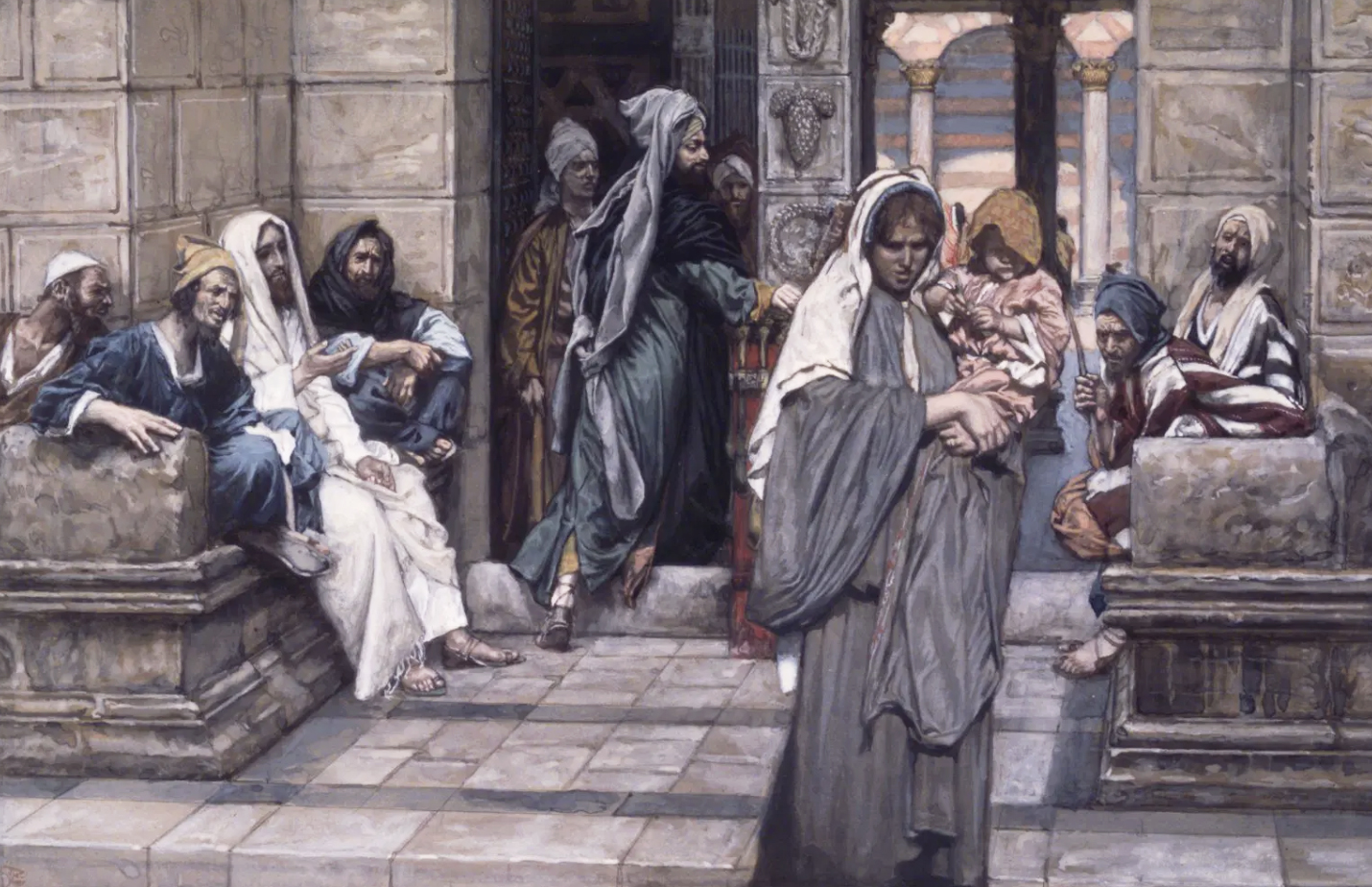
Richard Newman’s poem, “Coins,” captures this tension between a tangible slice of metal and the abstract value it represents. His speaker’s “fist of change” bears the grime of time. It carries the hope and despair of all who have exchanged money for bread to feed a family, a cigarette to assuage anxiety, a wish for better days. Mark’s account of the Widow’s offering similarly highlights the link between tangible and abstract value. Jesus, sitting deliberately “opposite the treasury,” is attentive to “how the people put money into the treasury” (emphasis added). He seems concerned not with the amount of the coin but with the value attached to it by the giver. Observing the widow’s demeanor—captured poignantly in Tissot’s painting, in the woman’s downward look and focused resolve amidst the wondering stares of the men—and omnisciently knowing her story, Jesus unilaterally revalues the woman’s coins, asserting that she “has put in more than all.”
Value works differently in the kingdom of God. The “grubby pennies” and “quarters not long for this life” “circulate” long beyond “our lives, and the lives of those long dead.” In his book on Money, Possessions, and Eternity, Randy Alcorn encourages Christians to invest in God’s kingdom much as the fiscally savviest of us do here—that is, by wisely diversifying our assets for the glory of God. We, like Newman’s speaker, are “exchanging the merest film / of our lives” with each transaction. And we cannot always control whether the “dirty charms” of our dollars end up “chiming in the dark pockets of the world.” But we can know that every sacrificial exchange of earthly coins for heavenly things is an investment in the eternal, moving our hearts in whatever direction we cast those coins.
Many of us have tasted the deep joy of kingdom-minded generosity. But we have an investor’s self-interest at stake, too, that rests not on the amount of our gift but on our posture of sacrifice. May we take the tokens that represent our lives and livelihoods—our time, our homes, our words, our coins, whatever it is with which we have been entrusted—and invest them in building what has eternal, kingdom value, monuments that “shall not be thrown down.”
Prayer
Father, you lavishly gave of yourself to rescue us. Please transform our hearts to value what you value. Teach us how to store up treasures in heaven, that we might maximize eternal gains from earthly coins for the glory of your name. Amen.
Bethany Williamson
Associate Professor of English
Biola University
For more information about the artwork, music, and poetry selected for this day, we have provided resources under the “About” tab located next to the “Devotional” tab near the top of the page.
About the Artwork | 1
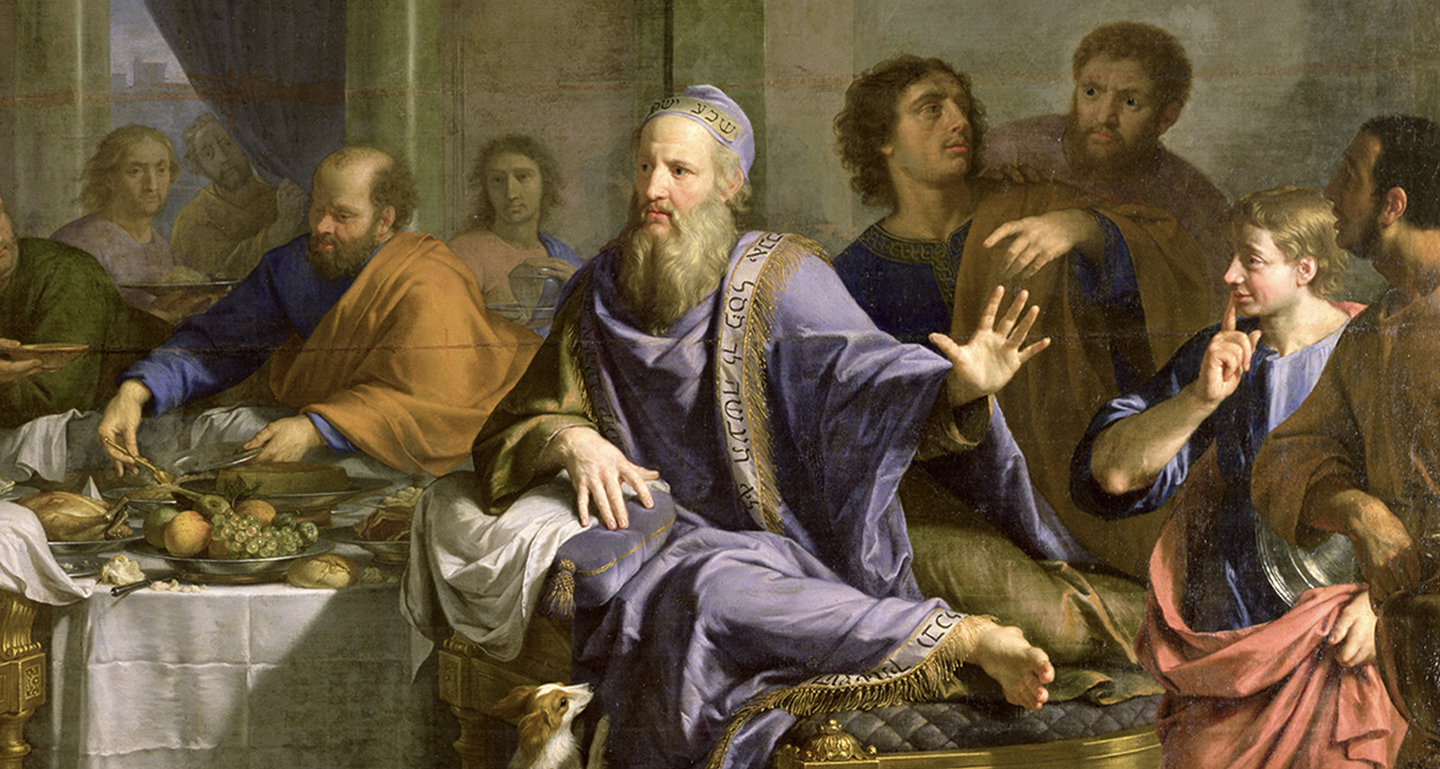
Christ in the House of Simon the Pharisee (detail)
Philippe de Champaigne
1656
Oil on canvas
292 x 399 cm
Musée des Beaux-Arts
Nantes, France
Public Domain
About the Artist
Philippe de Champaigne (1602–1674) was a Brabancon-born French baroque painter. He was a founding member of the Académie Royale de Peinture et de Sculpture in Paris, the premier art institution in France in the eighteenth century. De Champaigne produced a large number of paintings, mainly religious works and portraits. Influenced by artist Peter Paul Rubens at the beginning of his career, his style later became more austere. Philippe de Champaigne remains an exceptional painter thanks to the brilliance of the colors in his paintings and the strength of his compositions. He portrayed the entire French court, the French high nobility, royalty, high members of the church and the state, parliamentarians and architects, and other notable people of his time.
About the Artwork | 2
Widow’s Mite
James Tissot
1886–1894
Opaque watercolor over graphite on gray wove paper
18.3 x 28.1 cm
Brooklyn Museum of Art
New York, New York
Public Domain
In this gospel scene by artist James Tissot, a wealthy man positioned at the centre of the painting drops his gift into the temple’s box. The widow who has just donated her last two pennies commands the foreground of the scene. Her gaze is directed downwards, avoiding all eye contact, as she hurries away. Almost nobody is looking at the rich man. Most of the onlookers, including Jesus and two of His disciples at the left of the painting, watch the woman as she departs. Jesus gestures toward her with approval, commending her generosity. Tissot has unusually depicted the widow as a young woman with a small child, highlighting her vulnerability, as both mother and child are dependent on the kindness of men such as these.
About the Artist
James Tissot (1836–1902) was a French painter and illustrator. He was a successful painter of fashionable, modern scenes and society life in Paris before moving to London in 1871. A friend and mentor of the impressionist painter Edgar Degas, Tissot also painted scenes and figures from the Bible. In 1885, Tissot had a revival of his Catholic faith, which led him to spend the rest of his life making paintings about biblical events. Moving away from impressionism and postimpressionism, Tissot returned to traditional, representational styles and narratives in his watercolors. To assist in his completion of biblical illustrations, Tissot traveled to the Middle East to make studies of the landscape and people. His series of 365 gouache illustrations showing the life of Christ were shown to critical acclaim and enthusiastic audiences in Paris, London, and New York, before being bought by the Brooklyn Museum in 1900. Tissot spent the last years of his life working on a series of paintings of subjects from the Old Testament, which he unfortunately never completed.
About the Music
“A Final Sacrifice” from the album Absolution and “Infinite Majesty” from the album Endless Flight
Instrumental
About the Composer/Performer
Luke Richards is a film and television composer based in London, England, and Los Angeles, California. Luke won the 2007 Sibelius National Young Film Composer Competition.
About the Poetry and Poet
Richard Newman is the author of four books of poetry, most recently Blues at the End of the World (Kelsay Books, 2024). His work has appeared in American Journal of Poetry, Best American Poetry, Boulevard, I-70 Review (featured poet), Innisfree Poetry Journal, Literary Matters, Poetry East, Rattle, Tar River Poetry, and many other magazines and anthologies. He currently teaches Creative Writing and World Literature at Al Akhawayn University in Morocco. Before moving to the Maghreb, he and his family lived in Vietnam, Japan, and the Marshall Islands. His website is newmanrichard.com.
About the Devotion Writer
Bethany Williamson is an Associate Professor of English at Biola, where she teaches courses in British and global literatures, as well as academic writing. Rich, integrative classroom conversations are one of her great joys. Her scholarly work focuses on Britain’s global interactions in the 17th and 18th centuries, integrative pedagogy, and the environmental humanities. She and her spouse live in Redondo Beach, where they are active in their local church.