March 17: Jesus Talks to the Disciples About His Impending Death and Resurrection (3X)
♫ Music:
Mark 8:31–33 (NKJV)
And He began to teach them that the Son of Man must suffer many things, and be rejected by the elders and chief priests and scribes, and be killed, and after three days rise again. He spoke this word openly. Then Peter took Him aside and began to rebuke Him. But when He had turned around and looked at His disciples, He rebuked Peter, saying, “Get behind Me, Satan! For you are not mindful of the things of God, but the things of men.”
Mark 9:30–32 (NKJV)
Then they departed from there and passed through Galilee, and He did not want anyone to know it. For He taught His disciples and said to them, “The Son of Man is being betrayed into the hands of men, and they will kill Him. And after He is killed, He will rise the third day.” But they did not understand this saying, and were afraid to ask Him.
Mark 10:32–34 (NKJV)
Now they were on the road, going up to Jerusalem, and Jesus was going before them; and they were amazed. And as they followed they were afraid. Then He took the twelve aside again and began to tell them the things that would happen to Him: “Behold, we are going up to Jerusalem, and the Son of Man will be betrayed to the chief priests and to the scribes; and they will condemn Him to death and deliver Him to the Gentiles; and they will mock Him, and scourge Him, and spit on Him, and kill Him. And the third day He will rise again.”
Poetry
“As due by many titles I resign”
by John Donne
As due by many titles I resign
Myself to thee, O God. First I was made
By Thee; and for Thee, and when I was decay’d
Thy blood bought that, the which before was Thine.
I am Thy son, made with Thyself to shine,
Thy servant, whose pains Thou hast still repaid,
Thy sheep, Thine image, and—till I betray’d
Myself—a temple of Thy Spirit divine.
Why doth the devil then usurp on me?
Why doth he steal, nay ravish, that’s Thy right?
Except Thou rise and for Thine own work fight,
O! I shall soon despair, when I shall see
That Thou lovest mankind well, yet wilt not choose me,
And Satan hates me, yet is loth to lose me.
Jesus Talks to the Disciples About His Impending Death and Resurrection (3X)
Jesus’ teachings were often hard. Not just hard to understand if spoken in parables, but hard to receive when said plainly. “Eat my flesh and drink my blood” repelled the sensibilities of many would-be disciples. “Take up your cross and follow me” left others recoiling. Still others walked away when he coached them to sell their possessions and give to the poor or to let the dead bury the dead.
Jesus’ twelve were no strangers to these hard teachings. But this talk of His suffering, death and resurrection was unconscionable, unnerving, and not to be tolerated. Peter had to put a stop to it. In response, Jesus rebuked him in no uncertain terms. He declared that Peter didn’t have God’s mind on the matter. Rather, his thinking aligned with the enemy, which is exactly how Jesus spoke to him—as if he was Satan! Imagine the disequilibrium that rocked Peter at Jesus’ rebuke.
How doggedly we disciples of Jesus can sometimes cling to our own ideas of what God would and wouldn’t do. Like Peter, we unwittingly take a position against His plan in a posture of resistance that can feel right in the moment but actually stands against His purpose. When He lovingly but firmly rebukes us, we may lament with our poet, “Why doth the devil [then] usurp on me?”
Wisdom warns us not to lean on our own understanding (Prov. 3:5). The ancients remind us that His ways and thoughts are far beyond our own. Paul wrote to the believers in Corinth that Christ is the power of God and the wisdom of God, because God’s foolishness is wiser than human wisdom, and God’s weakness is stronger than human strength.
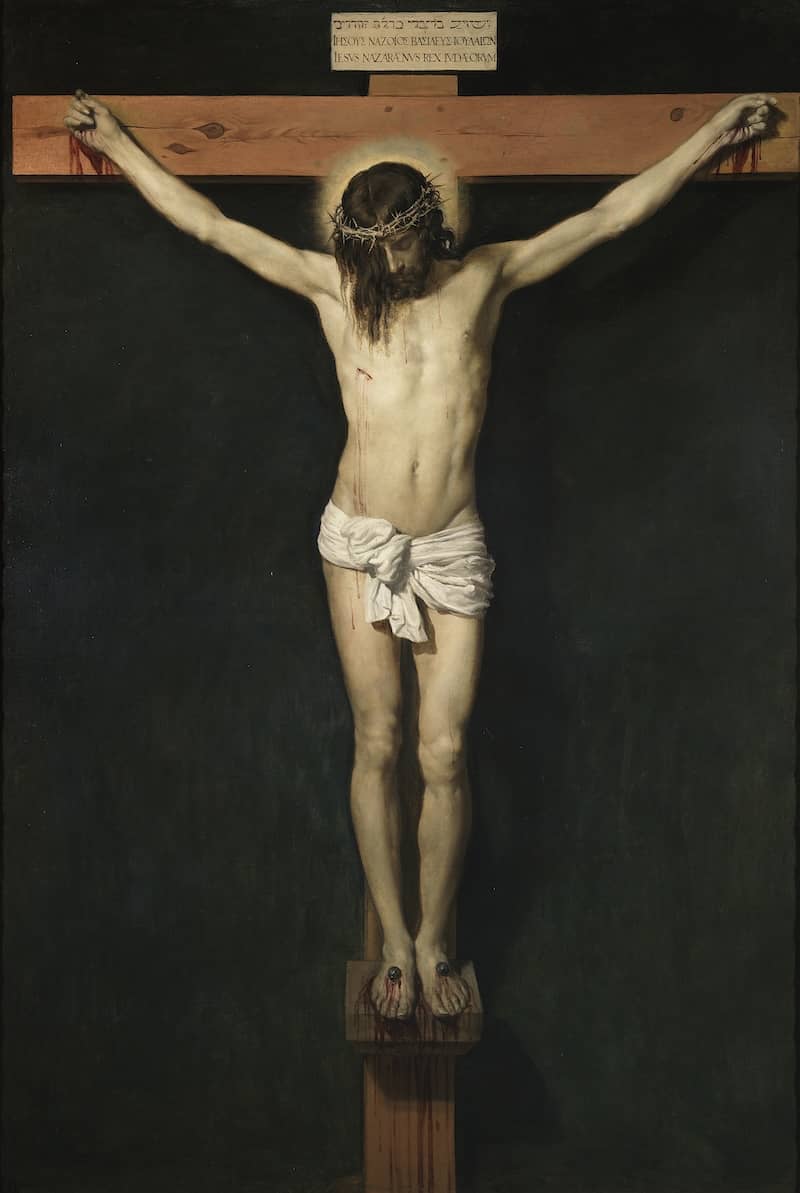
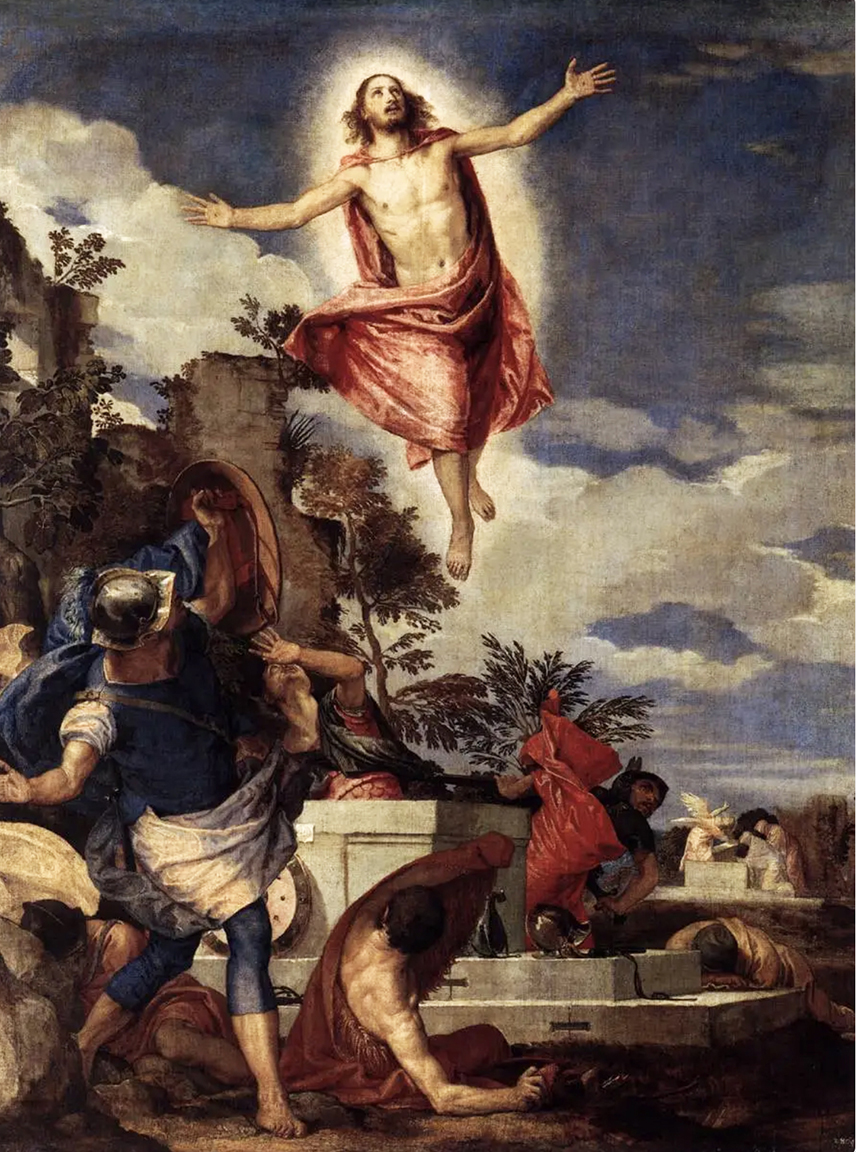
Today’s works of art portray events that unfolded as Jesus said they would. The Son of Man was rejected, betrayed, mocked, scourged, spat on, condemned and killed. On the third day, Jesus rose to life again. Glory Hallelujah! No resistance or objection of man or demon could derail God’s plan to save us.
Dallas Holm sings triumphantly, “...I’ll rise again. Ain’t no power on earth can tie Me down! Yes, I’ll rise again. Death can’t keep me in the ground.”
Just as we celebrate Christ’s victory over death, we joyfully anticipate His imminent return and eternal reign as King.
In hopeful expectation, Holm ends his song with Jesus’ wonderful promise: “. . . I'll come again. Ain't no power on earth can keep Me back. Yes, I'll come again. Come to take my people back.”
We need not be dismayed by the appearance of defeat and weakness in the working out of God’s plan in this world. His power and wisdom will always prevail. Take heart! He’s coming again to reign. It won’t be long.
Prayer
Our Lord Jesus, thank you! Everything happened just as you said. Your love for us knows no bounds. Give us humble, courageous hearts that we would align with the mind of Christ and desire the will of the Father above all. Be glorified in and through us, we pray.
Kay Vinci, M.Div.
Writer and editor
For more information about the artwork, music, and poetry selected for this day, we have provided resources under the “About” tab located next to the “Devotional” tab near the top of the page.
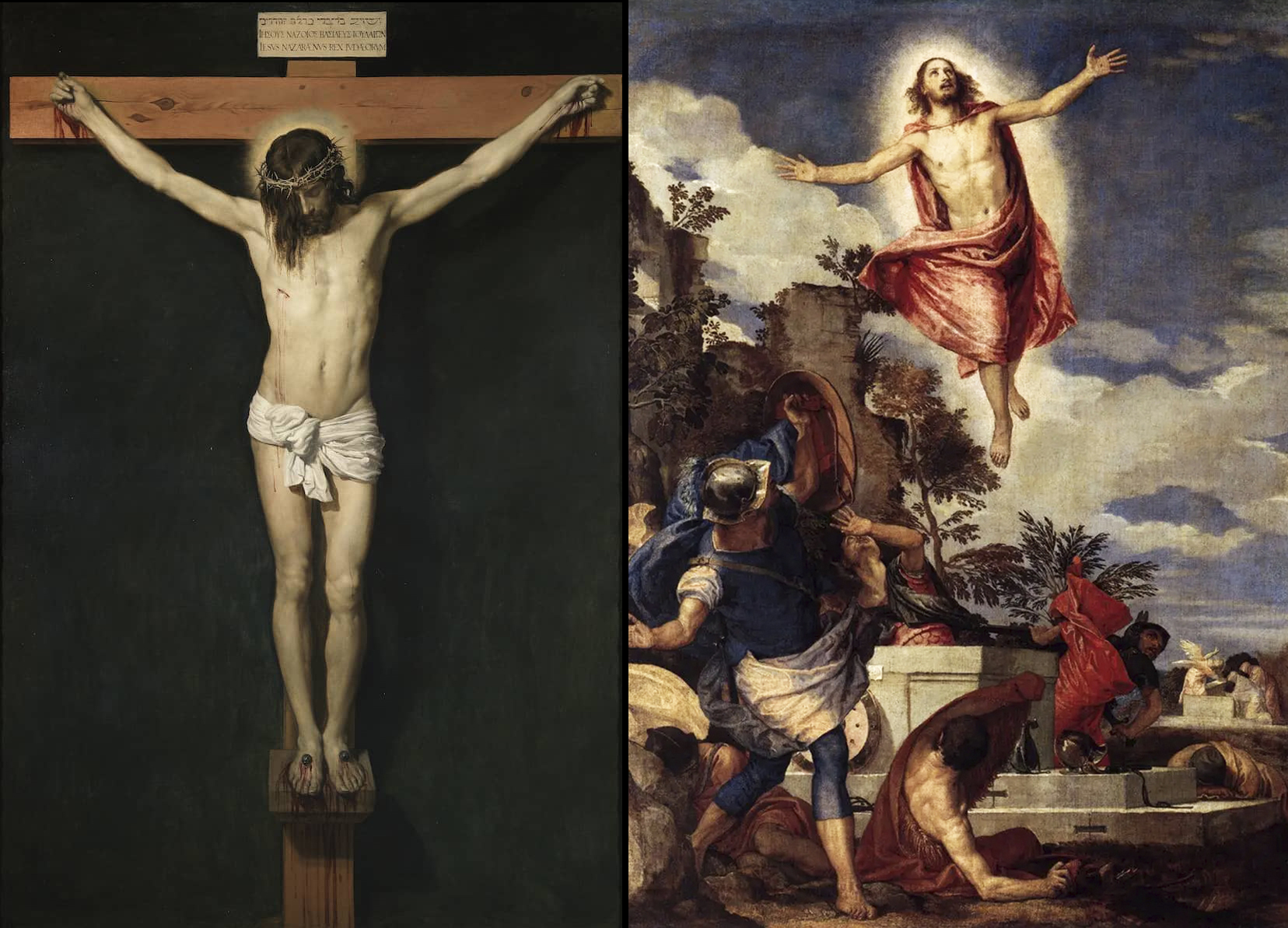
About the Artwork | 1 (L)
Christ Crucified (Christ on the Cross)
Diego Velázquez
1632
Oil on canvas
249 × 170 cm
Museo del Prado
Madrid, Spain
Public Domain
Christ Crucified is a painting by Diego Velázquez depicting the crucifixion of Jesus. Christ has both arms drawn a subtle curve instead of forming a triangle. The head shows a narrow halo, as if it came from the figure itself; the face is resting on the chest, showing just enough of His features. The long, straight hair covers a great part of His face, perhaps signaling his death, already inflicted, as shown by the wound on the right side. The painting lacks the characteristic dramatic qualities of baroque painting. The influence of classical painting is shown by the calm posture of the body, the idealized face, and the leaning head. On the other hand, the influence of baroque Caravaggism can be seen in the strong chiaroscuro between the background and the body, and in the strong, artificial lighting over the cross. Velazquez's use of light and shadow creates the idea that the subject is rising from the darkness, almost as if Christ's body is emanating light.
About the Artist
The Spanish painter Diego Velázquez (1599–1660) was the leading artist in the court of King Philip IV and one of the most important painters of the “Spanish Golden Age.” In addition to numerous renditions of scenes of historical and cultural significance, he was an important portrait artist. He painted scores of portraits of the Spanish royal family, other notable European figures, and commoners alike.
About the Artwork | 2 (R)
Resurrection of Christ
Paolo Veronese
1570
Oil on canvas
136 x 104 cm
Gemäldegalerie
Dresden, Germany
Public Domain
The subject of this painting by Venetian painter Paolo Veronese is the resurrection of Christ. Despite the sealed tomb and the presence of guards watching over it, on the third day after His crucifixion, the Savior, who bears the stigmata of the passion, floats upwards from the tomb with outstretched arms and His gaze directed heavenwards. Veronese visualises the miracle by means of the fiercely gesticulating soldiers, who respond with signs of fear and horror. In the background to the right, the artist depicts a later scene, with a repetition of the tomb—the arrival of the women in the morning to anoint Christ's body. They found the sepulchre empty but an angel is there to tell them what had occurred on that first Easter Day.
About the Artist
Paolo Veronese (1528–1588), along with artists Titian and Tintoretto, was part of the “great trio that dominated Venetian painting” during the Italian Renaissance of the late sixteenth century. Veronese was trained in the mannerist style, but later developed his own style with a brighter and more vibrant color palette. Veronese painted numerous walls, ceilings, and altarpieces for churches, as well as portraits and scenes from mythology. His large-scale feast works painted for monasteries in Venice and Verona are among his most famous works.
About the Music
“Rise Again” from the album Early Works
Go ahead, drive the nails in my hands.
Laugh at me where you stand.
Go ahead, and say it isn't me,
The day will come, when you will see!
'Cause I'll rise again
Ain't no power on earth can tie me down,
Yes, I'll rise again.
Death can't keep me in the ground!
Go ahead, and mock my name,
My love for you is still the same.
Go ahead, and bury me.
But very soon I will be free!
'Cause I'll rise again.
Ain't no power on earth can tie me down.
Yes, I'll rise again.
Death can't keep me in the ground!
Go ahead, and say I'm dead and gone.
But you will see that you were wrong.
Go ahead, try to hide the Son.
But all will see that I'm the One!
'Cause I'll come again.
Ain't no power on earth can keep me back.
Yes, I'll come again.
Come to take my people back.
About the Composer/Performer
Dallas Holm (b. 1948) is an American singer-songwriter of Christian music, whose musical ministry has spanned almost four decades. His 1977 live album, with the group Praise, featured Dallas Holm on acoustic guitar and vocals, Tim and Ladonna Johnson on keyboards and vocals, and Randy Adams on bass. Holm's influence has been greatest in contemporary Christian music. While he has had several hit singles in CCM, he is best known for "Rise Again," which is about the resurrection of Jesus. Over the course of Holm's career, he has performed many styles of music, including adult contemporary, country, blues, reggae, and pop-rock. Holm remains active as the director of praise ministries and is a member of the Christian Motorcyclists Association.
About the Poetry and Poet
John Donne (1572–1631) was an Anglican cleric and one of England’s most gifted and influential poets. Donne was so respected by his followers that they thought him “a king that ruled as he thought fit, the universal monarchy of wit.” Raised a Roman Catholic, Donne later converted to Anglicanism, though his sensibility, as indicated perhaps in his late Christian poetry, always seems to have remained with the Roman Catholic Church. Unable to find civil employment, Donne was eventually persuaded of his calling to the church and took Anglican orders in 1615. His work is distinguished by its emotional intensity and its capacity to deeply delve into the paradoxes of faith, human and divine love, and personal salvation. His works are noted for their strong, sensual style and contain a variety of forms, including sonnets, love poems, religious poems, Latin translations, epigrams, elegies, songs, satires, and sermons. His poetry is noted for its eloquent language, fusion of intellect and passion, and inventiveness of metaphor. In 1621, he was appointed the dean of St Paul's Cathedral in London and also served as a member of Parliament in 1601 and in 1614. After a resurgence in his popularity in the early twentieth century, Donne’s reputation as one of the greatest writers of English prose and poetry was established.
About the Devotion Writer
Kay Vinci has written for a variety of publications, created a kid's day camp curriculum and self-published a children’s story. She lives in Southern California.