February 20: Christ Calls Twelve Disciples
♫ Music:
Mark 1:14–20 (NJKV)
Now after John was put in prison, Jesus came to Galilee, preaching the gospel of the kingdom of God, and saying, “The time is fulfilled, and the kingdom of God is at hand. Repent, and believe in the gospel.”
And as He walked by the Sea of Galilee, He saw Simon and Andrew his brother casting a net into the sea; for they were fishermen. Then Jesus said to them, “Follow Me, and I will make you become fishers of men.” They immediately left their nets and followed Him. When He had gone a little farther from there, He saw James the son of Zebedee, and John his brother, who also were in the boat mending their nets. And immediately He called them, and they left their father Zebedee in the boat with the hired servants, and went after Him.
Mark 3:13–19 (NKJV)
And He went up on the mountain and called to Him those He Himself wanted. And they came to Him. Then He appointed twelve, that they might be with Him and that He might send them out to preach, and to have power to heal sicknesses and to cast out demons: ]Simon, to whom He gave the name Peter; James the son of Zebedee and John the brother of James, to whom He gave the name Boanerges, that is, “Sons of Thunder”; Andrew, Philip, Bartholomew, Matthew, Thomas, James the son of Alphaeus, Thaddaeus, Simon the Cananite; and Judas Iscariot, who also betrayed Him. And they went into a house.
Poetry
“The Call of the Disciples"
by Malcolm Guite
From Sounding the Seasons, enlarged edition (Canterbury Press, 2024).
Used by kind permission of Canterbury Press and Malcolm Guite.
He calls us all to step aboard his ship,
Take the adventure on this morning’s wing,
Raise sail with him, launch out into the deep,
Whatever storms or floods are threatening.
If faith gives way to doubt, or love to fear,
Then, as on Galilee, we’ll rouse the Lord,
For he is always with us and will hear
And make our peace with his creative Word,
Who made us, loved us, formed us and has set
All his beloved lovers in an ark;
Borne upwards by his Spirit, we will float
Above the rising waves, the falling dark,
As fellow pilgrims, driven towards that haven,
Where all will be redeemed, fulfilled, forgiven.
Believers’ Doubt
The shadow of pain is lifted from my eyes
And I see how gold you are.
—Joy Davidman, Sonnet XLII
The calling of the twelve is a watershed event in the Gospels. Today’s exuberant musical selection perfectly captures that historic moment. The disciples eagerly followed their new master. They grew in their faith as they walked beside Jesus in the flesh. Yet even though they knew Him, experienced His presence, and witnessed His miracles, they still faced doubts about who He was.
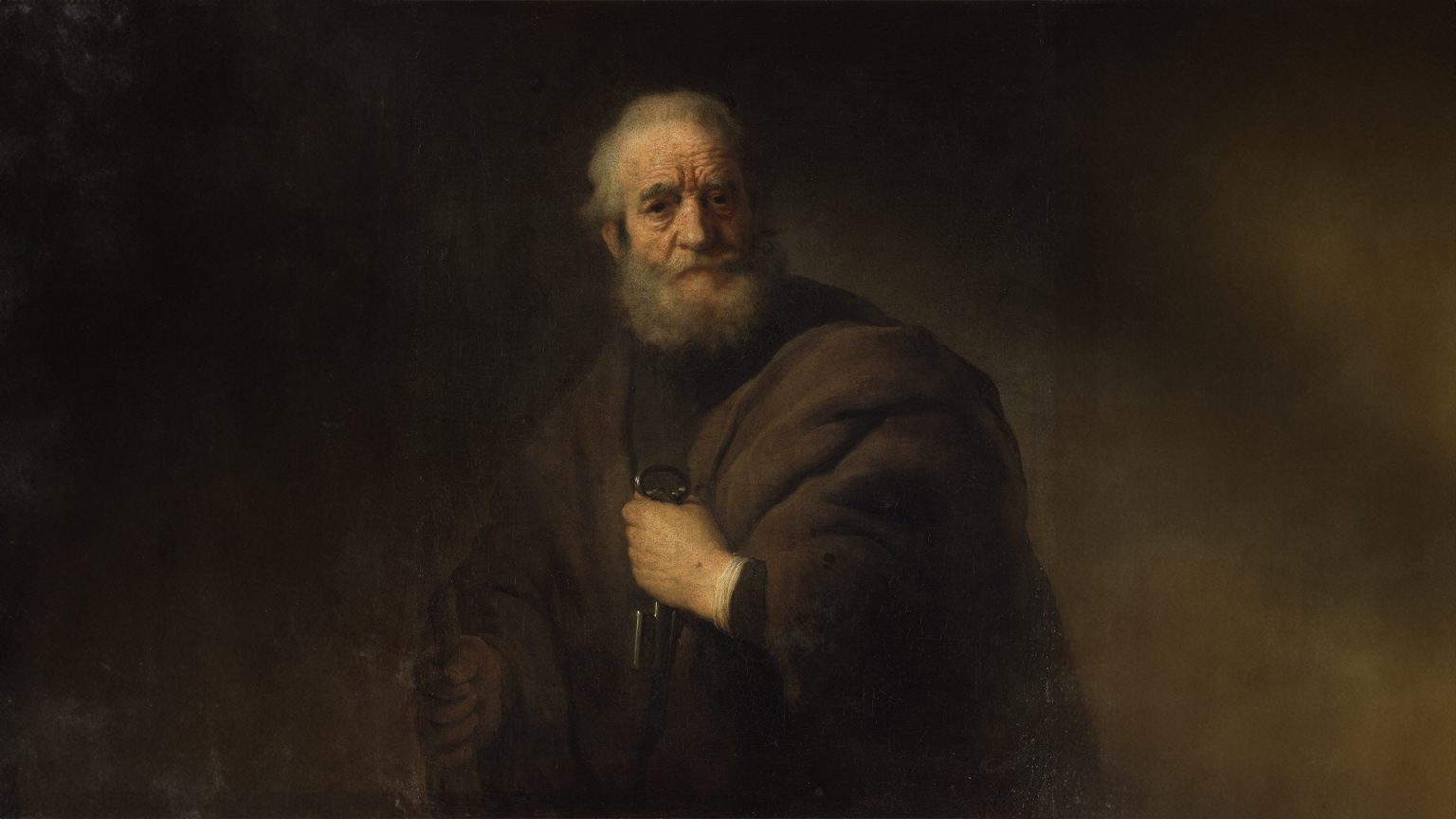
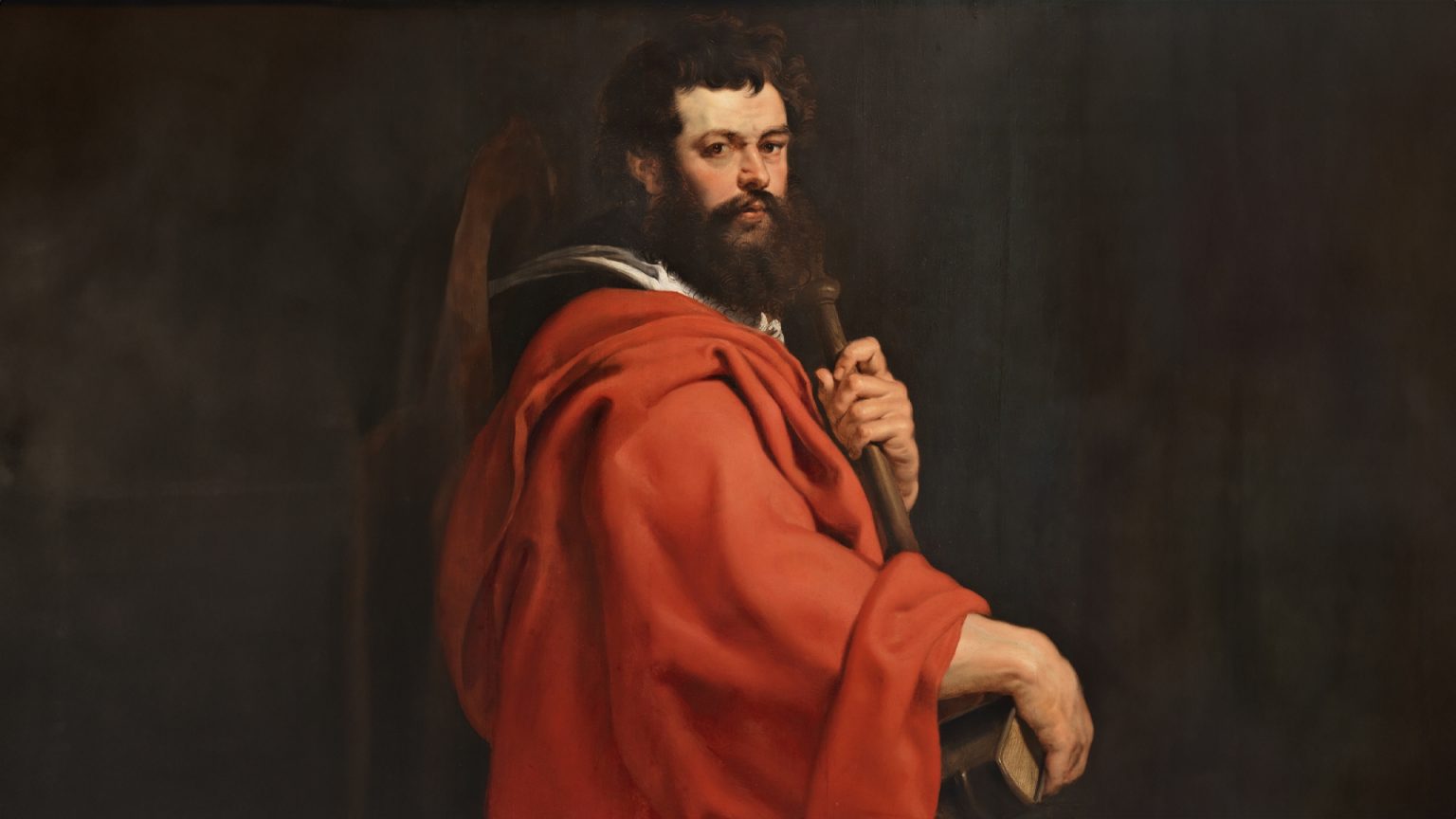
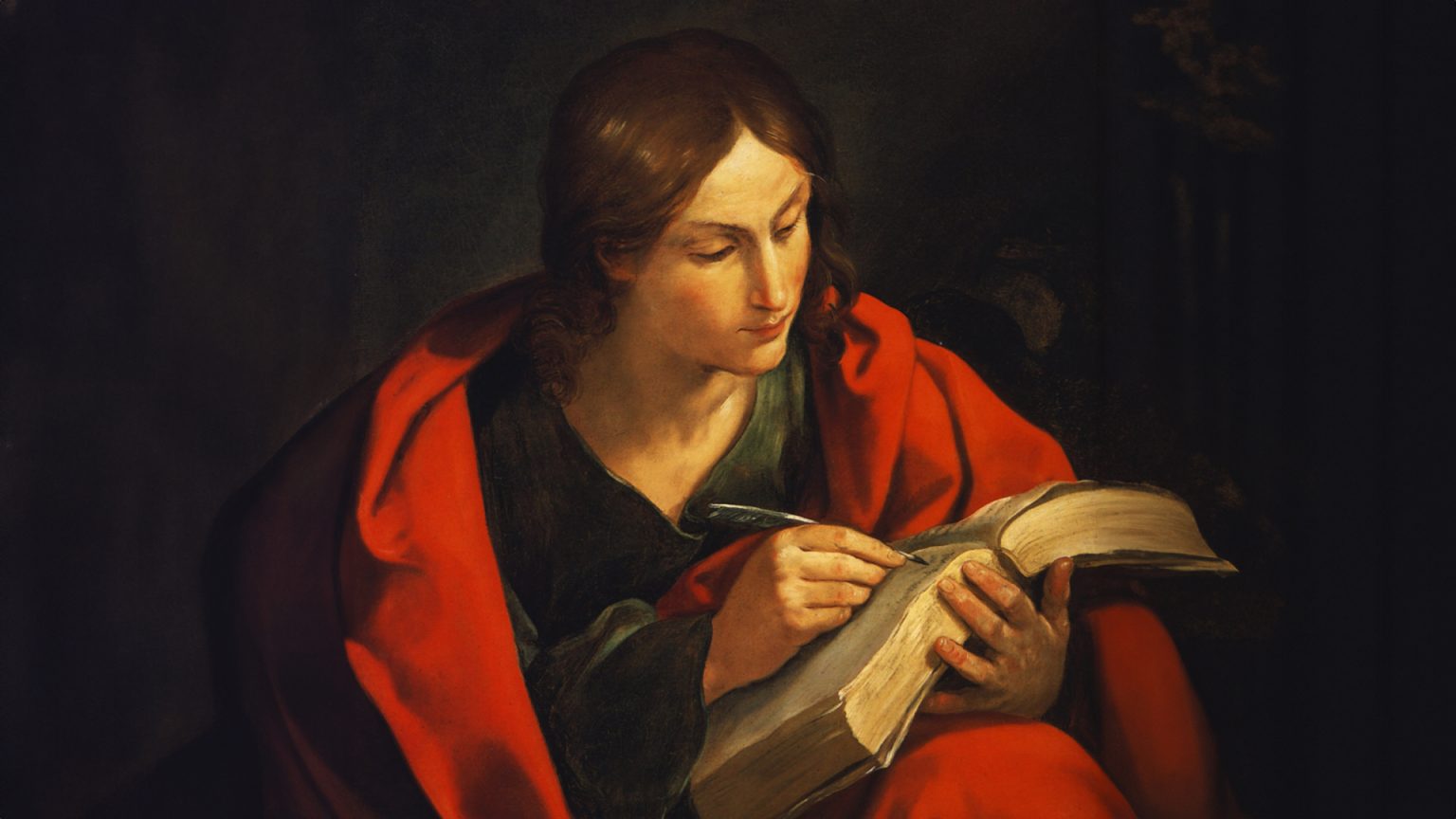
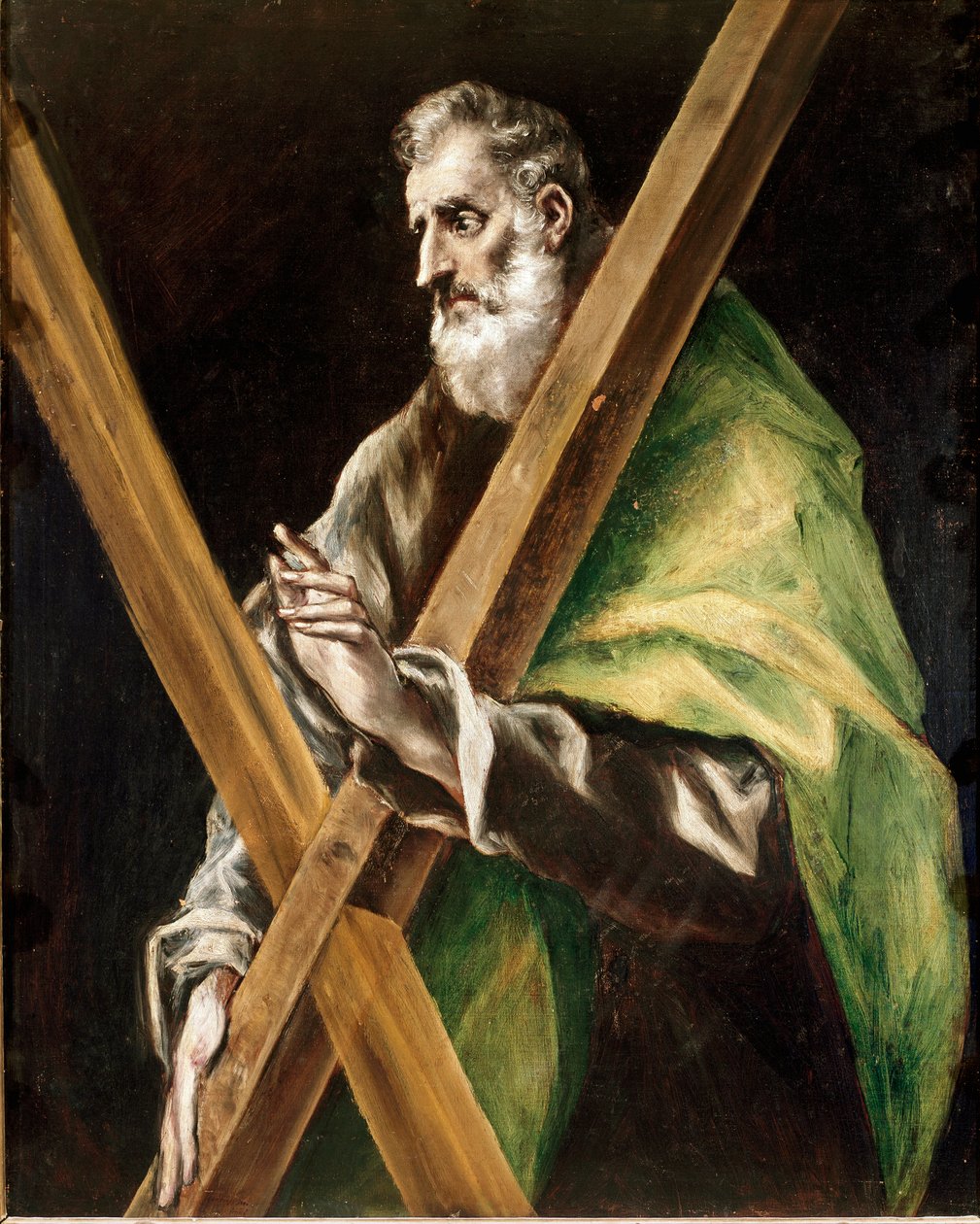
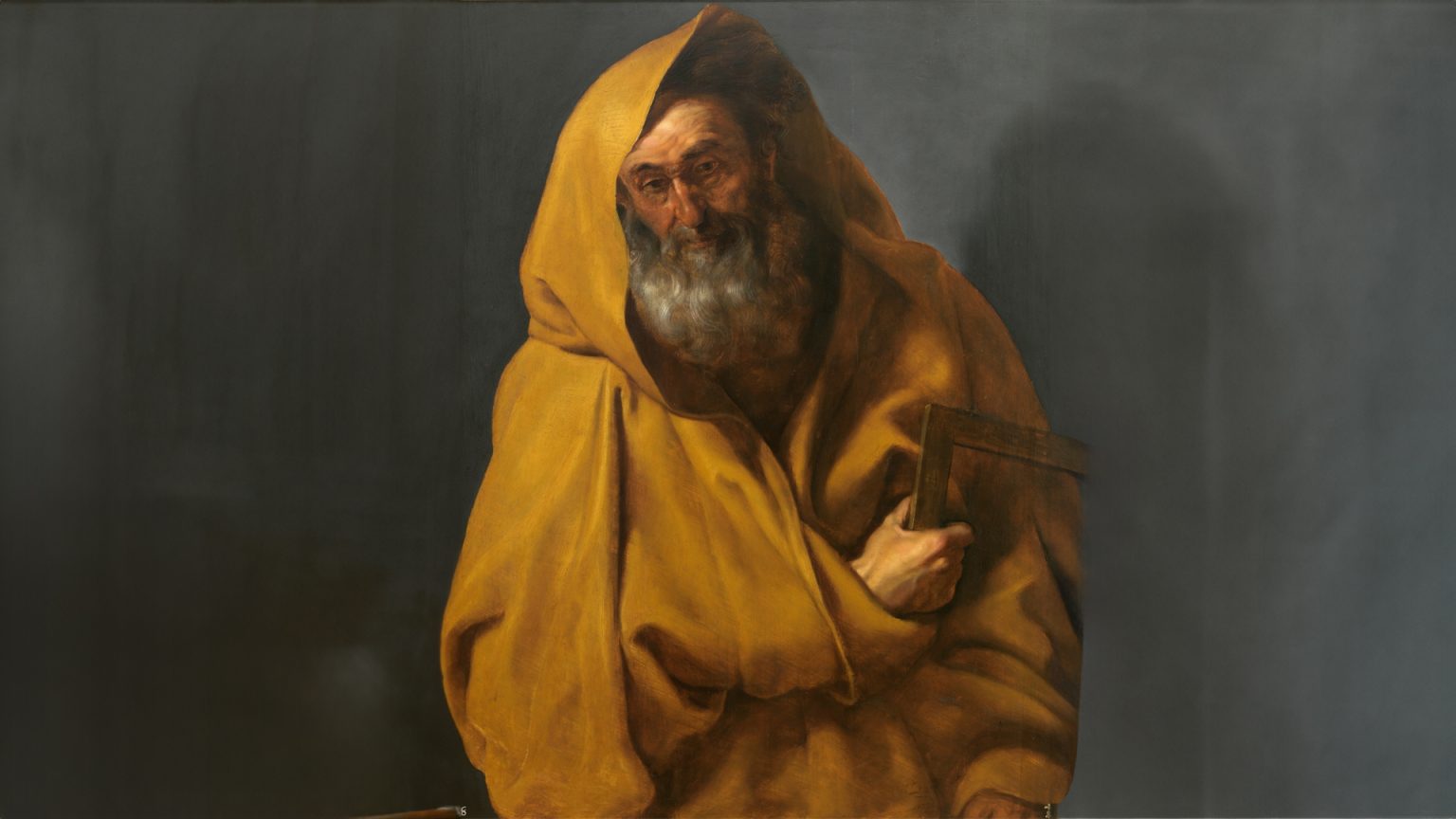
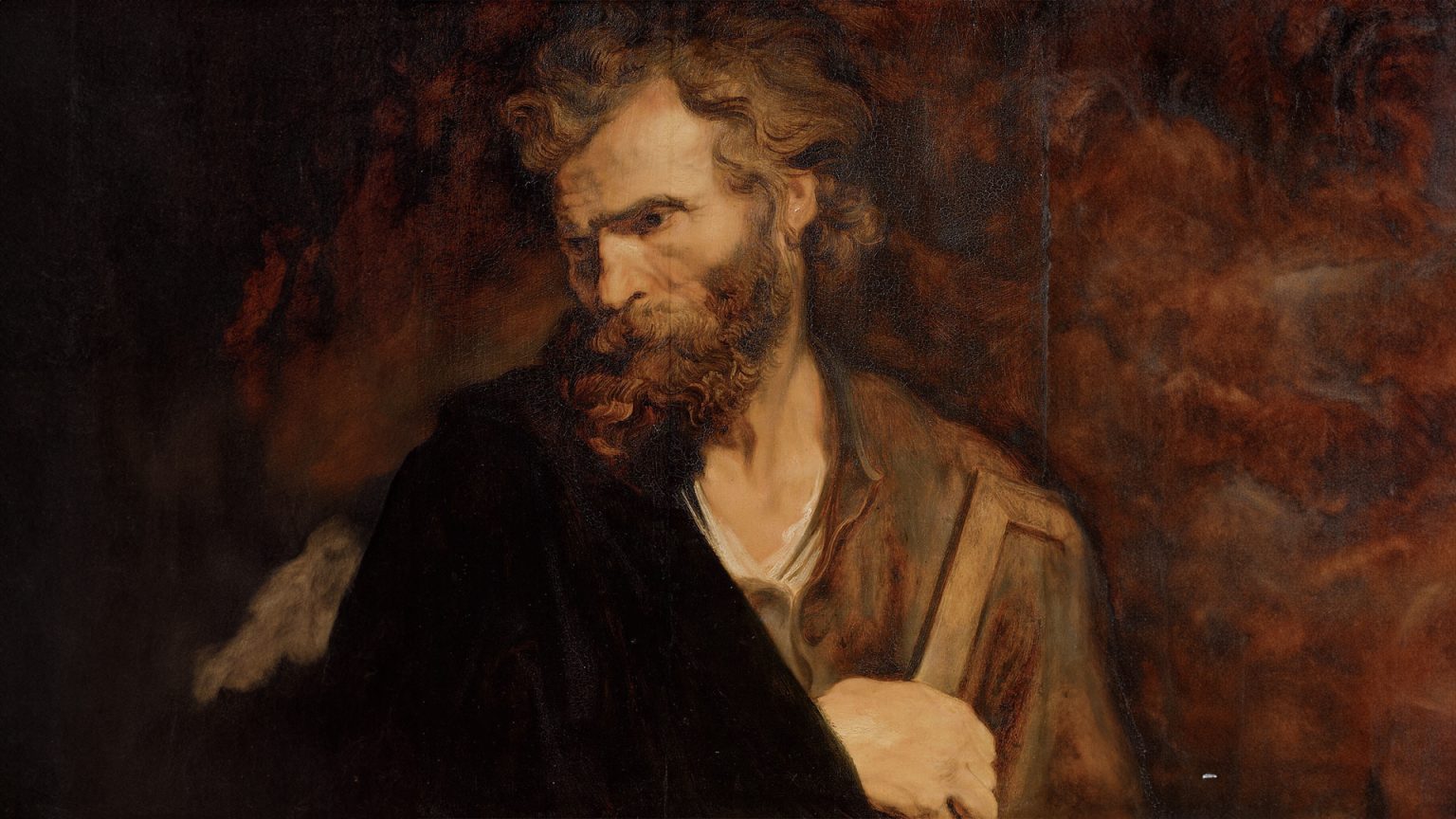
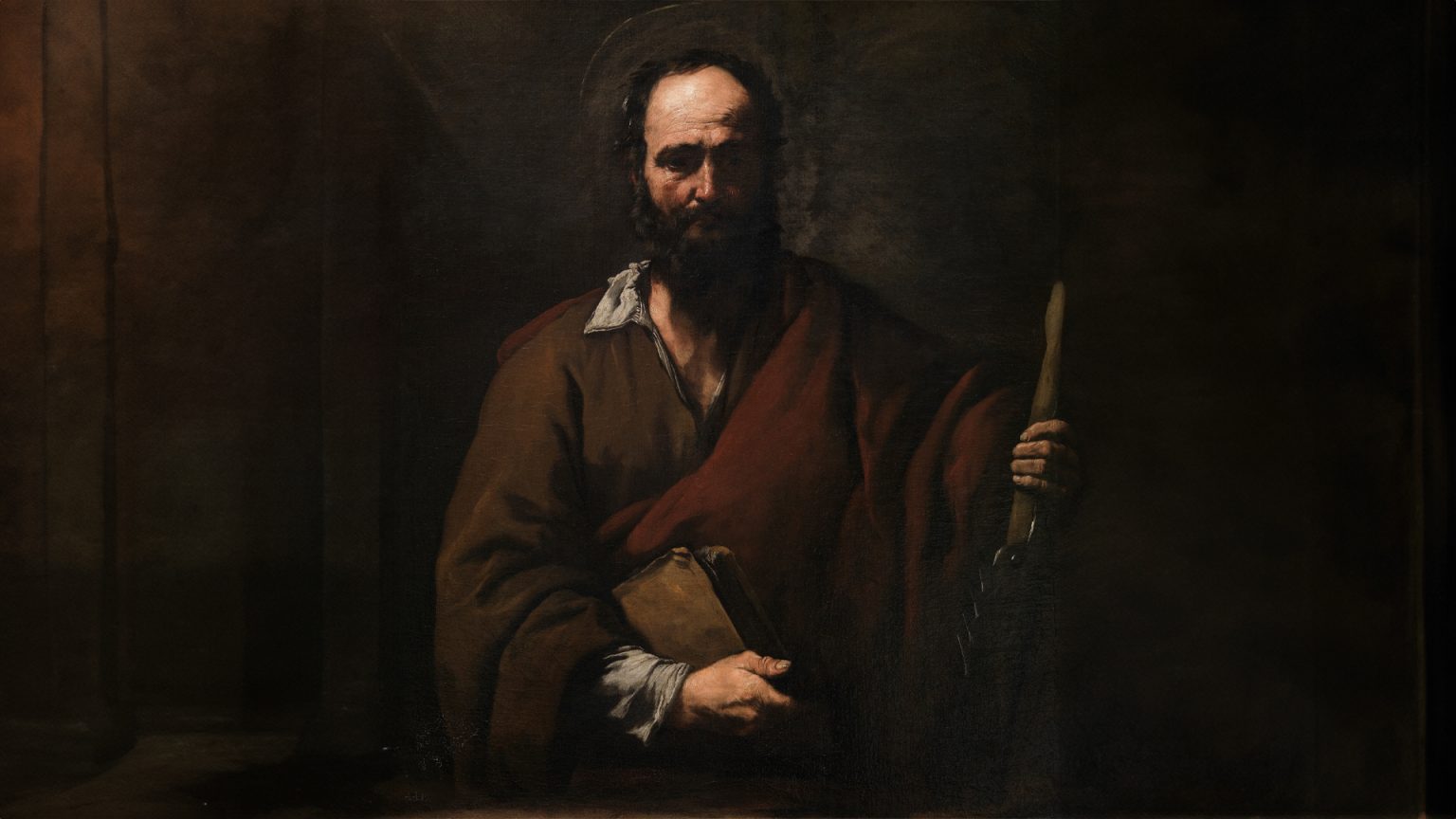
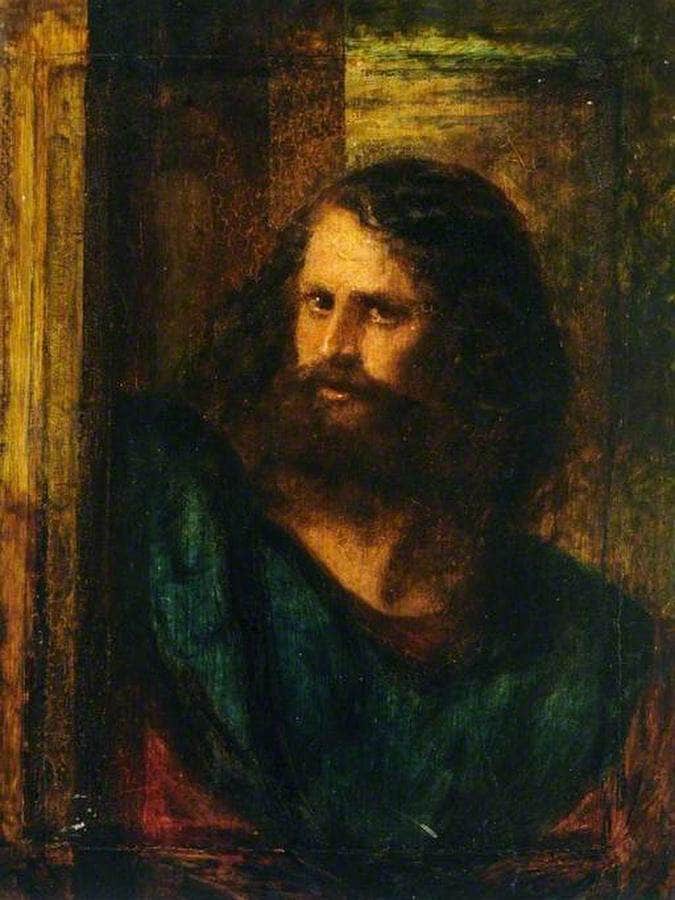
Artists have often tried to imagine what the disciples looked like, as we see in today’s twelve paintings. If we look at each more closely, we’ll see a reflection of ourselves, especially if we consider their actions prior to the Day of Pentecost. The Bible presents a clear picture of their failings. Peter reveals how prone we are to deny Jesus’ Lordship. Like James and John, we worship ego. John, “the disciple Jesus loved,” was still fearful, showing how slow we are to grasp the abiding nature of God’s love. Andrew and Philip were both quick to recognize Jesus as the Messiah, yet abandoned Him at His arrest. Nathanael shows how skeptical we can be. We’re like Matthew, motivated more by greed than compassion. In Thomas, we see our own hard-hearted doubts. Even what scholars call James’ quiet faithfulness was shaken by the cross. Thaddaeus asked why Jesus revealed Himself to the disciples and not the world, yet he also fled during Jesus’ arrest, pointing to how slow we are to grasp the certainty of His call. We risk seeing the world through our political views like Simon the Zealot, and Judas condemns us when we attempt to wrestle God’s will from His hands. We look much like the disciples, our doubts propelling our sinful thoughts and actions.
The Twelve spent three years walking beside Jesus, hearing Him explain the Father’s plan. But as that plan unfolded, they abandoned Jesus and went into hiding, their faith shattered.
We are particularly vulnerable to the enemy’s fiery darts of doubt during times of trial or suffering. Malcolm Guite acknowledges this in today’s poem:
Whatever storms or floods are threatening.
If faith gives way to doubt, or love to fear,
Others have also expressed faltering faith during turbulent times. Just when C. S. Lewis’ relationship with Joy Davidman was going from deep friendship to deep love, they discovered she had terminal cancer. They chronicle their anguish in their writings.
In her book Becoming Mrs. Lewis, Patti Callahan writes a fictional account of Joy. She based it on reading Joy’s published and unpublished letters, essays, novels, and poetry. She built it by overlaying what she calls a skeleton of facts with emotional truth derived from these writings. Callahan shows how the diagnosis upended Joy’s faith. In her book, she imagines Joy saying:
“During these months I went from experiencing the mystical peace of God to black doubt… Did I believe God could exist at all?”
After her death, Lewis went through a similar trial of faith. In his book A Grief Observed he writes about his faith, “Was I deceived? Was it all a fantasy?”
Davidman and Lewis both came through the fire, growing to understand that God had been with them, and that His word is sound even to the depths.
Bible scholars are clear in their pastoral shepherding that we the flock can experience periods of doubt. They encourage us to pass through it by praying even if we aren’t sure God is there; by continuing in the Scriptures; and by fellowshipping with the saints who will encourage our faith, even as Guite’s poem turns us from doubt:
Borne upwards by his Spirit, we will float
Above the rising waves, the falling dark,
As fellow pilgrims, driven towards that haven,
Where all will be redeemed, fulfilled, forgiven.
After Christ’s ascension, His promised Holy Spirit filled the disciples with supernatural power. These men, with all their failings, were transformed into fearless evangelists who Christianized the known world. All died as martyrs of the faith, with the exception of John, who died after being exiled on the island of Patmos.
Today’s Mark 3:13 verse says that Jesus called “those He Himself wanted.” We see our reflection in the disciples. Just as He lovingly restored and transformed them when their faith gave way, He restores and transforms us. This is the anchor of our faith: His call is sure, so is His hold.
Prayer
“Let me know Thee, O Thou who knowest me; let me know Thee, even as I am known.”
—Augustine, Confessions, Book X
Jayne English
Essayist
For more information about the artwork, music, and poetry selected for this day, we have provided resources under the “About” tab located next to the “Devotional” tab near the top of the page.
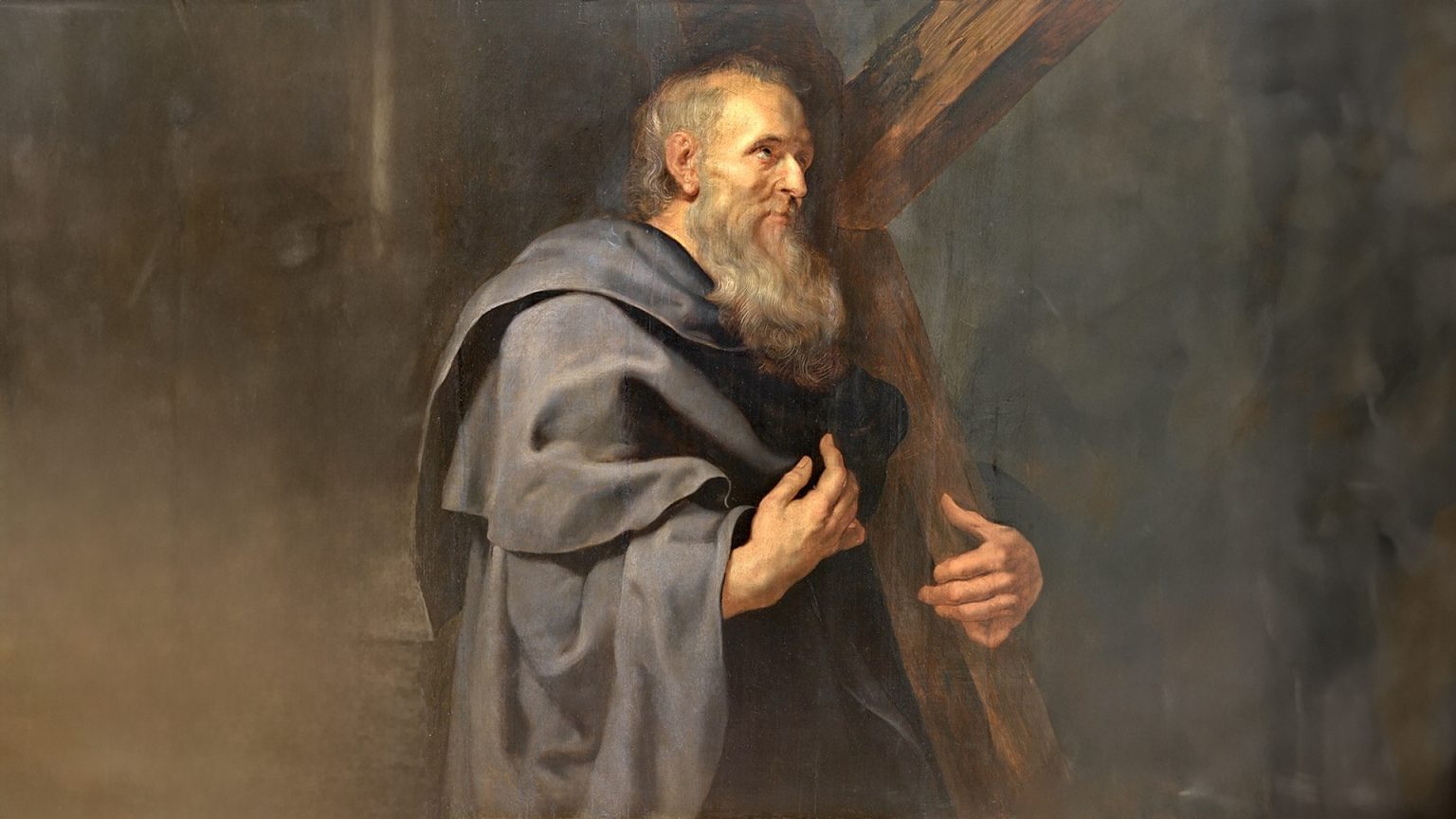
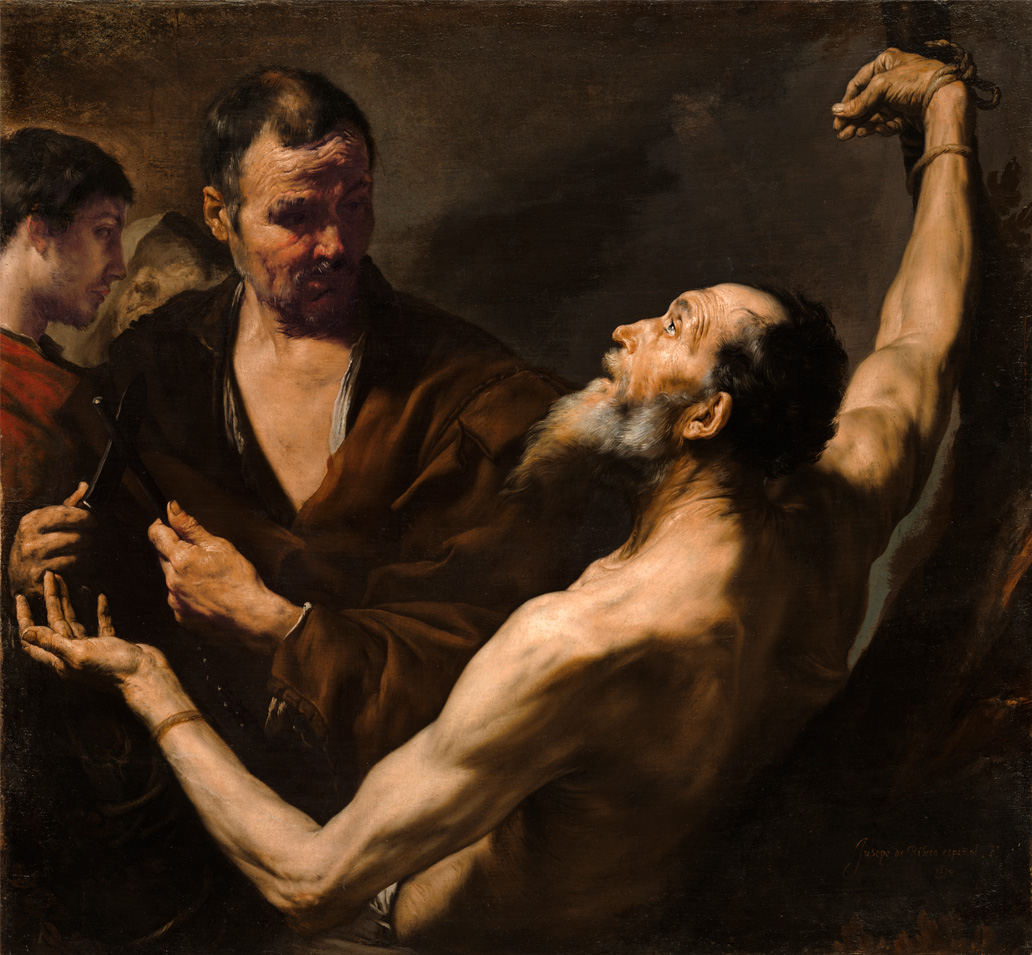
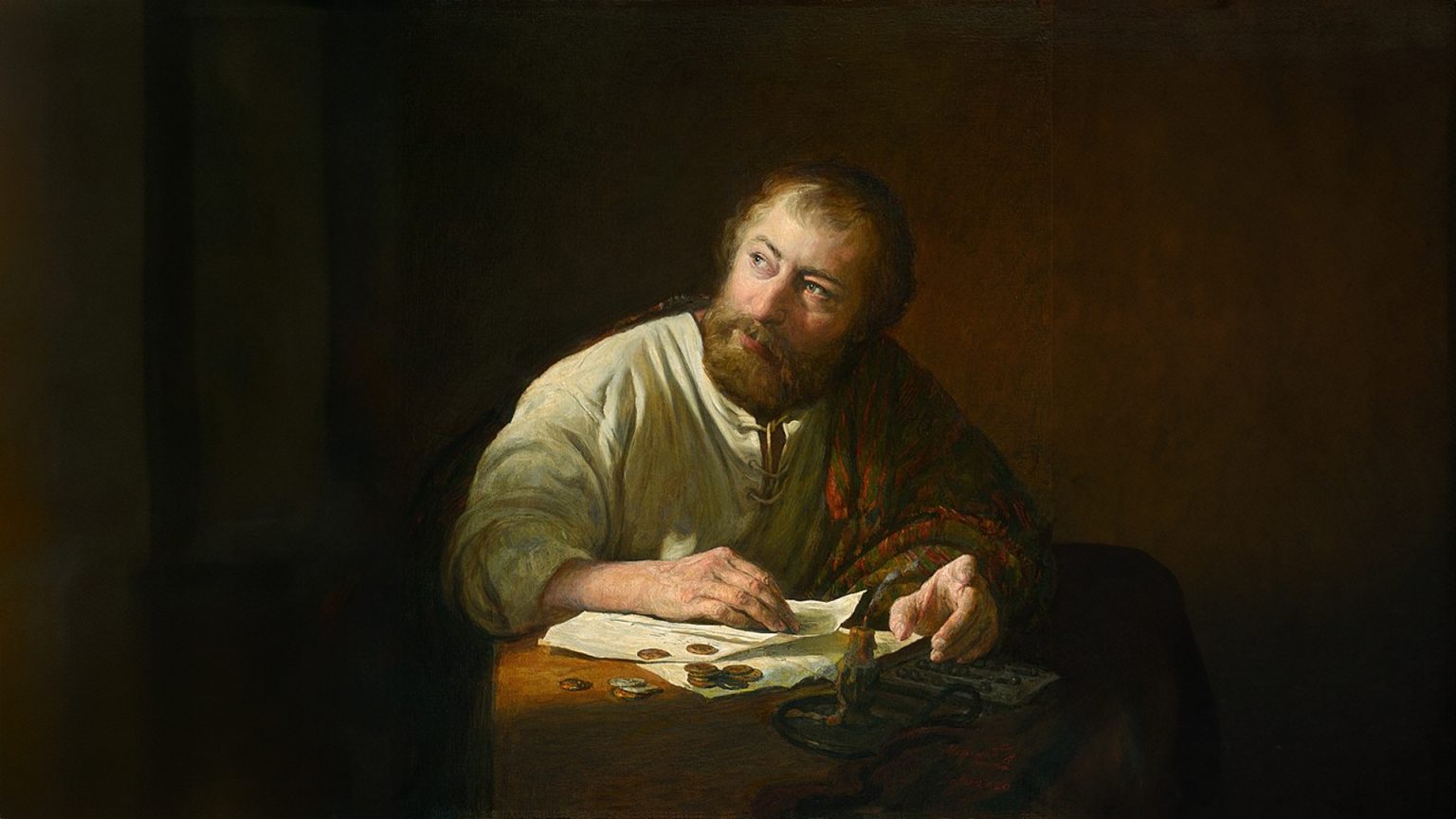
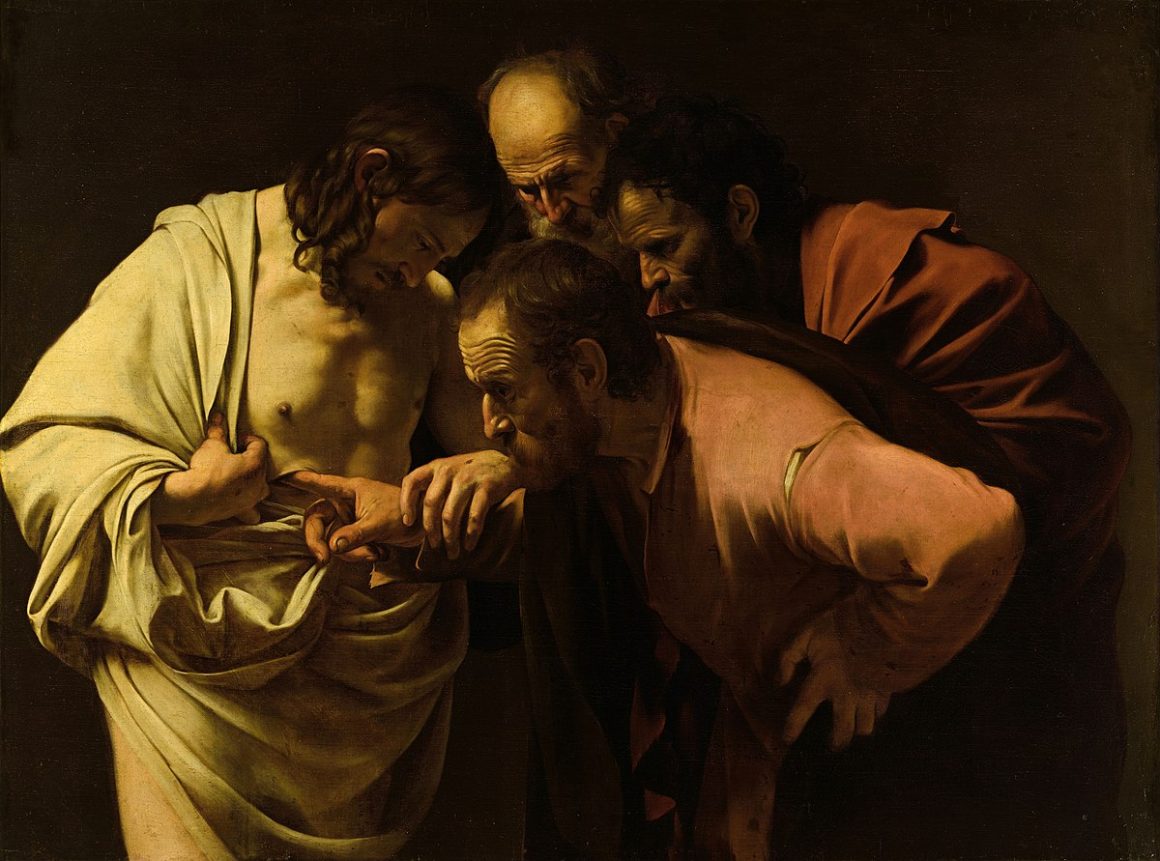
Image 1: The Apostle Peter; Image 2: St. James the Apostle; Image 3: St. John; Image 4: St. Andrew the Apostle; Image 5: St. Phillip; Image 6: The Martyrdom of St. Bartholomew (Nathaniel); Image 7: The Calling of St. Matthew; Image 8: The Incredulity of St. Thomas; Image 9: James the Son of Alphaeus; Image 10: The Apostle Jude (Thaddaeus); Image 11: Simeon the Zealot; Image 12: Judas Iscariot.
About the Artwork | 1
The Apostle Peter
Rembrandt van Rijn
1632
Oil on canvas
Public Domain
The apostle Peter, also known as Saint Peter, Simon Peter, and Cephas, was one of the twelve main disciples of Jesus Christ, and along with James and John, he was one of Jesus’ closest companions. In the Gospels, Peter is portrayed as impetuous, always speaking his mind and acting on impulse. Peter was originally known as Simon, but Jesus gave him the nickname Cephas (John 1:42), which translates to Peter, meaning “rock.” In the New Testament, Peter is most known for walking on water (Matthew 14:28–33), disowning Jesus to avoid persecution (Luke 22:54–62), addressing the crowd at Pentecost (Acts 2:14–41), envisioning a church that included Jews and Gentiles together (Acts 10:9–48), and being a “pillar” of the church (Galatians 2:9). Peter didn’t write any of the four gospels himself, but he plays a major role in all of them. Catholic and Orthodox tradition treats Peter as the first bishop of Rome—or pope—and also as the first bishop of Antioch. According to tradition, Peter was crucified by Emperor Nero around 64 AD, around the time of the Great Fire of Rome, which Nero blamed on Christians. Tradition holds that he asked to be crucified upside down because he didn’t believe he was worthy of dying the same death as Jesus.
About the Artist | 1
Rembrandt Harmenszoon van Rijn (1606–1669) was a Dutch draftsman, painter, and printmaker. He is generally considered one of the greatest visual artists in the history of art and the most important in Dutch art history. Unlike most Dutch masters of the seventeenth century, Rembrandt’s works depict a wide range of style and subject matter, from portraits and self-portraits to landscapes, genre scenes, allegorical and historical scenes, and biblical and mythological themes. His contributions to art came in a period of great wealth and cultural achievement that historians call the “Dutch Golden Age.” Having achieved youthful success as a portrait painter, Rembrandt’s later years were marked by personal tragedy and financial hardships. Rembrandt’s portraits of his contemporaries, self-portraits, and illustrations of scenes from the Bible are regarded as his greatest creative triumphs. His self-portraits form a unique and intimate autobiography, in which the artist surveyed himself without vanity and with the utmost sincerity. Rembrandt’s foremost contribution to the history of printmaking was his transformation of the etching process from a relatively new reproductive technique into a true art form. Because of his empathy for the human condition, he has been called one of the greatest storytellers in the history of art, possessing an exceptional ability to render people in their various moods and dramatic guises. Rembrandt is also known as a painter of light and as an artist who favored an uncompromising realism.
About the Artwork | 2
St. James the Apostle
Peter Paul Rubens
1610–1612
Oil on canvas
108 x 83 cm
Museo del Prado
Madrid, Spain
Public Domain
James the son of Zebedee was another one of Jesus’ three main disciples, along with his brother John and Peter. Like many of the disciples, James was a fisherman before Jesus called him. James son of Zebedee is often referred to as James the Greater to distinguish him from James son of Alphaeus, James the Less (who may be the same person as James son of Alphaeus), and James the brother of Jesus. James is the only disciple whose martyrdom is recorded in the Bible (Acts 12:2). Herod had him killed by sword, and he was likely beheaded. Tradition claims James son of Zebedee was a missionary to Spain and that his body was buried there, but since his death took place in Jerusalem very early in the history of the church, there are numerous challenges with this tradition. Nonetheless, the Camino de Santiago—a pilgrimage to the church where James is allegedly buried—was one of the most popular Christian pilgrimages for centuries, and Santiago de Compostela, the shrine dedicated to Saint James, is still a destination for more than three hundred thousand people every year.
About the Artist | 2
Sir Peter Paul Rubens (1577–1640) was a prolific Flemish artist and diplomat from the Duchy of Brabant in the Southern Netherlands (modern-day Belgium). He is considered the most influential artist of the Flemish baroque tradition. Rubens' highly charged compositions reference erudite aspects of classical and Christian history. His unique and immensely popular baroque style emphasized movement, color, and sensuality, which followed the immediate, dramatic artistic style promoted in the Counter-Reformation. Rubens produced altarpieces, portraits, landscapes, and history paintings of mythological and allegorical subjects. In addition to running a large workshop in Antwerp that produced paintings popular with nobility and art collectors throughout Europe, Rubens was a classically educated humanist scholar and diplomat who was knighted by both Philip IV of Spain and Charles I of England. Rubens was an avid art collector and dealer and had one of the largest collections of art and books in Antwerp.
About the Artwork | 3
St. John
Guido Reni
Oil on canvas
78 x 65 cm
Bob Jones University
Greenville, South Carolina
Public Domain
John the son of Zebedee (not to be confused with John the Baptist) was the third disciple considered to be part of Jesus’ “inner circle” along with his brother James and Peter. Like James, Peter, and several other disciples, John was a fisherman. According to tradition, the apostle John wrote five books of the New Testament—more than any other apostle. John is most known for asking Jesus if he and James could sit on either side of Jesus’ throne in heaven and unwittingly promising to follow Jesus into martyrdom (Mark 10:35–40); taking care of Jesus’ mother, Mary (John 19:26–27); beating Peter in a race to Jesus’ empty tomb (John 20:2–9); and being a “pillar” of the church (Galatians 2:9). Tradition says that John is “the disciple whom Jesus loved” as recorded in the gospel of John. John is never mentioned by name in this gospel, and “the disciple whom Jesus loved” appears to be one of the most prominent disciples (he sits next to Jesus at the Passover meal, and Peter often defers to him). According to tradition, John died of old age, a rare occurrence among the apostles, most of whom were martyred.
About the Artist | 3
Guido Reni (1575–1642) was an early Italian baroque painter noted for the classical idealism of his paintings of mythological and religious subjects. In his artwork, Reni evolved a style that tempered baroque exuberance and complexity with classical restraint. The frescoes of Raphael and ancient Greek sculptures were main inspirations for him. Reni’s graceful, classical style featured refined colors, delicate and varied flesh tones, soft modeling, and gentle emotion. He strove toward a classical harmony in which reality is presented in idealized proportions. His religious compositions made him one of the most famous painters of his day in Europe, and a model for later baroque artists.
About the Artwork | 4
St. Andrew the Apostle
El Greco
1610–1614
Oil on canvas
80 x 100 cm
El Greco Museum
Toledo, Spain
Public Domain
The apostle Andrew was Simon Peter’s brother. Like his brother, he was a fisherman. According to the gospel of John, Andrew was the first disciple Jesus called, and while Peter is known for recognizing Jesus as the Messiah (Matthew 16:13–20), Andrew not only brought Peter to Jesus, but he told him Jesus was the Messiah. Before he was called by Jesus Christ, Andrew was actually a disciple of Jesus’ cousin, John the Baptist. Peter, James, and John were clearly Jesus’ closest disciples and this indicates that Andrew held a position of leadership among the disciples. The Bible doesn’t tell us much else about Andrew. Eusebius of Caesarea, the father of church history, tells us that Origen, a scholar from the second and third century, claimed Andrew was sent to Scythia, an ancient region in central Eurasia. Tradition claims Andrew was crucified in the Greek city of Patras around 60 AD, and that like Peter, he didn’t consider himself worthy of dying the same way as Jesus. Instead, he was bound to an X-shaped cross, which became a symbol known as Saint Andrew’s Cross.
About the Artist | 4
El Greco (1541–1614) was a painter, sculptor, and architect of the Spanish Renaissance. He trained and became a master within the post-Byzantine art tradition before traveling at age twenty-six to Venice and later Rome, where he opened a workshop and executed a series of works. During his stay in Italy, El Greco enriched his style with elements of the style known as mannerism and of the Venetian Renaissance. In 1577, he moved to Toledo, Spain, where he lived and worked until his death. In Toledo, El Greco received several major commissions and produced his best-known paintings. El Greco's dramatic and expressionistic style was met with puzzlement by his contemporaries but found appreciation in the twentieth century. El Greco is regarded as a precursor of the art movements of both expressionism and cubism. He is best known for tortuously elongated figures and often fantastic or phantasmagorical pigmentation, marrying Byzantine traditions with those of Western painting.
About the Artwork | 5
St. Philip
Peter Paul Rubens
c. 1611
Oil on canvas
Museo del Prado
Madrid, Spain
Public Domain
Philip the apostle is only mentioned eight times in the New Testament, four of which are the lists of apostles. However, there are three other people named Philip in the New Testament. Two are sons of King Herod, and the other is Philip the evangelist, who was often mistaken for Philip the apostle, even early on. One of the few details the Bible gives us about Philip the apostle is that, like Peter and Andrew, he comes from Bethsaida, a town near the Sea of Galilee. Later Christian traditions describe Philip as the apostle who preached in Carthage, Greece, Syria, and Asia Minor.
About the Artist | 5
Sir Peter Paul Rubens (1577–1640) was a prolific Flemish artist and diplomat from the Duchy of Brabant in the Southern Netherlands (modern-day Belgium). He is considered the most influential artist of the Flemish baroque tradition. Rubens' highly charged compositions reference erudite aspects of classical and Christian history. His unique and immensely popular baroque style emphasized movement, color, and sensuality, which followed the immediate, dramatic artistic style promoted in the Counter-Reformation. Rubens produced altarpieces, portraits, landscapes, and history paintings of mythological and allegorical subjects. In addition to running a large workshop in Antwerp that produced paintings popular with nobility and art collectors throughout Europe, Rubens was a classically educated humanist scholar and diplomat who was knighted by both Philip IV of Spain and Charles I of England. Rubens was an avid art collector and dealer and had one of the largest collections of art and books in Antwerp.
About the Artwork | 6
The Martyrdom of St. Bartholomew (Nathaniel)
Jusepe de Ribera
1634
Oil on canvas
104 x 113 cm
National Gallery of Art
Washington, D.C.
Public Domain
St. Bartholomew was one of Jesus' twelve apostles, widely identified with Nathanael, a figure from the gospel of John who was introduced to Jesus by the apostle Philip. Known for his initial skepticism about Jesus of Nazareth, he quickly came to believe in Jesus as the Son of God and King of Israel after a profound personal encounter. Bartholomew is one of the most obscure apostles. His name only appears in the four lists of Jesus’ twelve main disciples, and he’s never listed with any titles or descriptions. All we really know is his name, and that he’s closely associated with Philip. Traditionally, Bartholomew is believed to have spread Christianity through missionary work, particularly in Armenia, where he is said to have been martyred by being flayed alive and then beheaded.
About the Artist | 6
Jusepe de Ribera (1591–1652) was a Spanish painter and printmaker. Ribera created history paintings, which included traditional biblical subjects and episodes from Greek mythology. He is perhaps best known for his numerous views of martyrdom, which at times are brutal scenes depicting bound saints and satyrs as they are flayed or crucified in agony. Less familiar are his occasional, but accomplished, portraits, still lifes, and landscapes. Nearly half of his surviving work consists of half-length portraits of workers and beggars, often older individuals in ragged clothes, posing as various philosophers, saints, apostles, and allegorical figures. Ribera's paintings, particularly his early work, are characterized by stark realism using a chiaroscuro style. His later work embraced a greater use of color, softer light, and more complex compositions, although he never entirely abandoned his Caravaggisti leanings.
About the Artwork | 7
The Calling of St. Matthew
A. N. Mironov
2010
Oil on canvas
85 x 70 cm
Private Collection
Used with permission of the artist
Matthew was a tax collector who was called by Jesus to be one of the twelve apostles. As a tax collector (or publican), Matthew collected taxes for Rome from his fellow Jews in Capernaum. That in itself would have been enough to make him feel like a political traitor as his profession was a symbol of Israel’s Roman occupation. Matthew’s inclusion among the twelve disciples presents a powerful picture of how God partners with all kinds of people—even those you’d least expect—to accomplish His purposes. And despite the fact that Matthew would have been considered a religious outsider, Jesus brought him into the inner circle. Despite the fact that Matthew is one of the better-known disciples, he’s actually only mentioned seven times in the Bible. He is traditionally regarded as the author of the gospel of Matthew. Traditions disagree on how and where Matthew died. Various accounts say he was beheaded, stoned, burned, or stabbed. One even suggests he died of old age, like John. However, most scholars believe he was probably martyred.
About the Artist | 7
Andrei Mironov (b. 1975) was born in Russia. His paintings and prints focus on religious themes that portray his Christian beliefs and ideals. His oil paintings of biblical scenes are reminiscent of the artist Caravaggio with their dramatic lighting and detailed portraits. Self-educated in painting, Mironov has worked as a portraitist since 2005. In 2007, he won the title "Profi" at Russian Art Week in Moscow. His participation in the First Chechen War as well as his police work has had a considerable influence on his artistic development. The artist defined Christianity as "the main theme of his oeuvres.” Today his paintings are found in private collections, in the Kashira local museum, in the Monastery of Our Lady of Kazan, and in the St. Nicholas Church in Yamskaya Sloboda (Ryazan).
About the Artwork | 8
The Incredulity of St. Thomas
Caravaggio
1601–1602
Oil on canvas
107 x 146 cm
Palais at Sanssouci
Potsdam, Berlin/Brandenburg, Germany
Public Domain
Thomas, perhaps better-known as “Doubting Thomas,” famously doubted the resurrection of Jesus and told the other disciples, “Unless I see in His hands the print of the nails, and put my finger into the print of the nails, and put my hand into His side, I will not believe.”(John 20:25). Thomas’ moment of skepticism earned him the nickname “Doubting Thomas,” which evolved into a term for anyone who needs proof before they believe something. The apostle Thomas is not a major Bible character as he’s only mentioned eight times in the entire New Testament, and four of those times are just lists of the twelve apostles. But while the Bible tells us little about him, Thomas’ cautious approach to believing in the resurrection laid the foundation for evidence-based faith and for the Protestant teaching of sola fide, or faith alone.
About the Artist | 8
Michelangelo Merisi da Caravaggio (1571–1610) was an Italian baroque painter whose influence and fame spanned far beyond his short career. He was trained in Milan and joined the art scene in Rome with his first two commissions in 1600, after which he never lacked patronage. Despite his wild personal life and death at age thirty-eight, the influence of his work can be seen in the works of other important artists such as Peter Paul Rubens, Bernini, and Rembrandt; direct followers of Caravaggio's style were called "Caravaggisti" or "Caravaggesque.” His distinctive style is characterized by a realistic observation of the human state, realistic depictions of emotional responses, and the use of tenebrism, or intensely dramatic lighting.
About the Artwork | 9
James the Son of Alphaeus
Peter Paul Rubens
1610–1612
Oil on panel
107 x 82.5 cm
Museo del Prado
Madrid, Spain
Public Domain
James son of Alphaeus is only mentioned in the four lists of apostles. So all we can say for sure about him is that he had a really common name and was the son of someone named Alphaeus. Almost everything else we know about him is speculation. Tradition says James son of Alphaeus was crucified in Egypt, where he was preaching, and another says he was stoned to death in Jerusalem.
About the Artist | 9
Sir Peter Paul Rubens (1577–1640) was a prolific Flemish artist and diplomat from the Duchy of Brabant in the Southern Netherlands (modern-day Belgium). He is considered the most influential artist of the Flemish baroque tradition. Rubens' highly charged compositions reference erudite aspects of classical and Christian history. His unique and immensely popular baroque style emphasized movement, color, and sensuality, which followed the immediate, dramatic artistic style promoted in the Counter-Reformation. Rubens produced altarpieces, portraits, landscapes, and history paintings of mythological and allegorical subjects. In addition to running a large workshop in Antwerp that produced paintings popular with nobility and art collectors throughout Europe, Rubens was a classically educated humanist scholar and diplomat who was knighted by both Philip IV of Spain and Charles I of England. Rubens was an avid art collector and dealer and had one of the largest collections of art and books in Antwerp.
About the Artwork | 10
The Apostle Jude (Thaddaeus)
Anthony Van Dyck
1650
Oil on canvas
Kunsthistorisches Museum.
Vienna, Austria
Public Domain
Jude the apostle is also known as Jude of James, Judas of James, Thaddeus, Judas Thaddeus, and Lebbaeus. Some identify him with Jesus’ brother Jude, the traditional author of the epistle of Jude, but the Bible doesn’t tell us these Judes are the same people. As with James son of Alphaeus, there’s not much we know about Jude of James without assuming he’s the same person as another Jude. It’s true that Jesus had a brother named Jude (Matthew 13:55, Mark 6:3). Most traditions assume Jude the apostle wrote the epistle of Jude because they assume he’s the same person as Jesus’ brother Jude. But unfortunately, Jude was a common name, and this relies on assumptions. Today’s scholars have mixed opinions on Jude’s authorship.
About the Artist | 10
Anthony Van Dyck (1599–1641) was a Flemish baroque artist who became the leading court painter in England after success in the Spanish Netherlands and Italy. He was successful as an independent painter and became a master in the Antwerp Guild in 1617. By this time, he was working in the studio of the leading northern painter of the day, Peter Paul Rubens, who became a major influence on his work. With the exception of Holbein, van Dyck and his contemporary Diego Velázquez were the first painters of preeminent talent to work mainly as court portraitists, revolutionising the genre. Van Dyck is best known for his portraits of the aristocracy, most notably Charles I, and his family and associates. He was the dominant influence on English portrait painting for over one hundred fifty years. He also painted mythological, allegorical, and biblical subjects. His influence extends into the modern period. The Van Dyke beard is named after him.
About the Artwork | 11
Simeon the Zealot
Jusepe de Ribera
ca. 1630
Oil on canvas
107 x 91 cm
Museo del Prado
Madrid, Spain
Public Domain
Simon the Zealot is only mentioned by name in lists of the apostles (Matthew 10:2–4, Mark 3:16–19, Luke 6:14–16, Acts 1:13). So, we know almost nothing about him. Even his moniker “the Zealot” is ambiguous enough that we can’t be sure what it means. He may have belonged to a Jewish sect known as the Zealots, who were bent on revolution and looking for a Messiah to violently overthrow Rome, or simply been zealous for Jesus and His teachings. Simon is mentioned occasionally in early church writings, but centuries after the Gospels were written; Jerome and others mistranslated Simon’s title, believing that Matthew and Mark referred to him as Simon the Canaanite or Simon the Cananaean.
About the Artist | 11
Jusepe de Ribera (1591–1652) was a Spanish painter and printmaker. Ribera created history paintings, which included traditional biblical subjects and episodes from Greek mythology. He is perhaps best known for his numerous views of martyrdom, which at times are brutal scenes depicting bound saints and satyrs as they are flayed or crucified in agony. Less familiar are his occasional, but accomplished, portraits, still lifes, and landscapes. Nearly half of his surviving work consists of half-length portraits of workers and beggars, often older individuals in ragged clothes, posing as various philosophers, saints, apostles, and allegorical figures. Ribera's paintings, particularly his early work, are characterized by stark realism using a chiaroscuro style. His later work embraced a greater use of color, softer light, and more complex compositions, although he never entirely abandoned his Caravaggisti leanings.
About the Artwork | 12
Judas Iscariot
William Etty
Oil on board
41.9 x 31.6 cm
Sheffield Museums
United Kingdom
Public Domain
Judas Iscariot is one of the most widely known of Jesus’ disciples. He infamously betrayed Jesus for thirty pieces of silver, which lead to Jesus’ death on the cross. Today, “Judas” is virtually synonymous with the word “traitor.” Judas appears in several New Testament stories, and while the gospel writers are in unanimous agreement that he betrayed Jesus, they present various takes on his motives and the circumstances surrounding his death. Judas Iscariot may have been considered “good with money” or trustworthy, because he became the treasurer for Jesus and His disciples. Judas betrayed Jesus to the Sanhedrin in the garden of Gethsemane, in exchange for thirty pieces of silver, by kissing Him on the cheek to reveal His identity to the crowd who had come to arrest Him. Judas Iscariot’s death was unique among the disciples. While James son of Zebedee was the only apostle to be martyred in the Bible, Judas Iscariot was the first to die—he committed suicide by hanging himself.
About the Artist | 12
William Etty (1787–1849) was an English artist best known for his historical paintings containing nude figures. He was the first significant British painter of nudes and still lifes. He completed his art apprenticeship and moved to London, where in 1807 he joined the Royal Academy Schools. Etty earned respect at the Royal Academy of Arts for his ability to paint realistic flesh tones, but had little commercial or critical success in his first few years in London. In the 1830s, however, Etty began to branch out into the more lucrative but less respected field of portraiture, and later became the first English painter to paint significant still lifes.
About the Music
“Leave Your Nets” from the album 25 to Life - For Prisoners of Hope Everywhere
I saw Him first by the sea.
I heard Him sayin' follow me.
I’ll set you up, he said.
For fishin’ again
Yes, I will.
This time you’ll be
Goin’ after
Women and men.
And He said, leave your nets, boys.
And leave your trade.
Leave the paltry little plans you made.
Come and be what you were born to be.
Come along, and follow me.
He had no cash, no security.
No good connections.
No temple authority.
He had no place to call his own.
Somehow like a magnet, he kept leading us on.
And He said, leave your nets, boys.
And leave your trade.
Leave the paltry little plans you made (plans you made).
Come and be what you were born to be.
Well, come along and follow me.
I could never have known,
On that day by the sea.
I could never have known,
The plans he was making.
And if I had known,
I would never have gone.
The risk was much
Too high for the taking.
For the taking.
Saw Him first by the sea, yes I did.
I heard Him calling, follow me (uh huh).
I’ll set you up he said,
For fishin’ again.
Yes, He did.
This time you’ll be
Goin’ after
Women and men.
And He said, leave your nets, boys.
And leave your trade.
Leave the paltry little plans you made.
Come and be what you were born to be.
Come along and follow me.
Ooooo, leave your nets, boys.
And leave your trade.
Come on and leave those paltry little plans you made, oh yeah.
Come and be what you were born to be.
Come along.
Come along.
Come along.
Come along.
Come along and follow me.
About the Composer/Performer
Ken Medema (b. 1943) is a composer/singer/songwriter who has been performing since 1973 in the United States, Canada, and Europe. Medema originally began performing as a music therapist. Some of his best-known songs have been birthed through the use of live improvisation during his performances. His lyrics generally provide social commentary on themes such as justice, hunger, poverty, homelessness, and Christian charity. In 1985 Ken founded his own independent recording company (Brier Patch Music), through which he has released most of his twenty-six albums. The business was named after Brer Rabbit’s home from the legendary Uncle Remus stories. “Brer Rabbit lived in a place not comfortable for anyone else,” Medema says, “and we decided to follow him there.”
About the Poetry and Poet
Malcolm Guite (b. 1957) is a poet, author, Anglican priest, teacher, and singer-songwriter based in Cambridge, England. He has published six collections of poetry: Saying the Names, The Magic Apple Tree, Sounding the Seasons: One Hundred and Ten Sonnets for the Christian Year, The Singing Bowl, Waiting on the Word, and the recently released Parable and Paradox: Sonnets on the Sayings of Jesus and Other Poems. Rowan Williams and Luci Shaw have both acclaimed his writing, and his Antiphons appeared in Penguin’s Best Spiritual Writing, 2013. Guite’s theological works include What Do Christians Believe? and Faith, Hope, and Poetry: Theology and the Poetic Imagination. Guite is a scholar of J. R. R. Tolkien, C. S. Lewis, and the British poets, and serves as the Bye-Fellow and chaplain at Girton College at the University of Cambridge, while supervising students in English and theology. He lectures widely in England and the USA, and in 2015 he was the CCCA Visionary-in-Residence at Biola University. Guite plays in the Cambridge rock band Mystery Train, and his albums include The Green Man and Dancing Through the Fire.
About the Devotion Writer
Jayne English is an essayist. She has a B.A. in humanities from Florida Southern College. She has published devotional articles in various publications and articles on art and faith for Relief Journal’s blog. She is thankful daily for the beauty God brings her way in nature, poetry, and amazing family and friends. She lives in Central Florida, where she enjoys reading, writing, and the blue sweep of sky. You can find more of her writing at jayneenglish.substack.com.